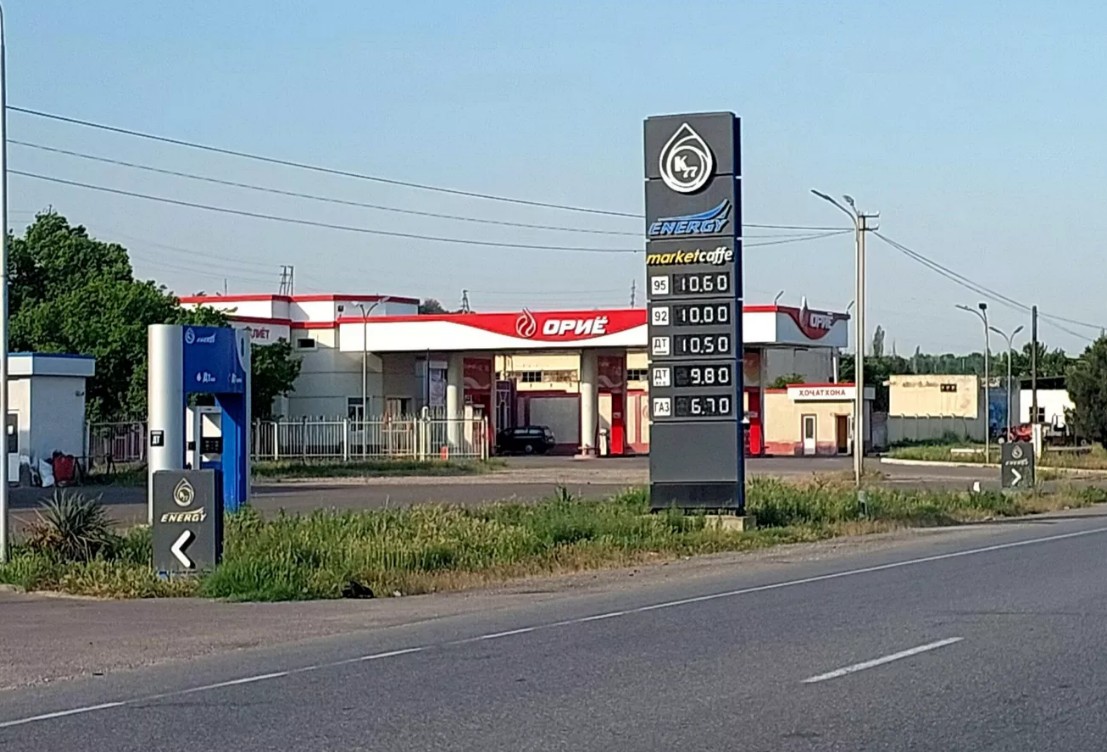
 A gas station in Tajikistan Photo: sputniknews.ru
The government of Tajikistan has slashed import customs duties to zero on gasoline, diesel, liquefied petroleum gas, and other petroleum products from non-CIS free trade zone nations through the end of 2026. The move clears the way to import fuel on preferential terms from Iran, Turkmenistan, and Azerbaijan, Asia-Plus reports.
Government Decree No. 744, signed on November 10, was published in the official newspaper Jumhuriyat on November 13. The zero-tariff rate will remain in effect until December 31, covering refined petroleum products and petroleum gases, including LPG. However, crude oil is excluded from the measure.
Imports from Russia, Kazakhstan, and other CIS Free Trade Area members were already exempt from import duties. The new tariff break aims to facilitate fuel purchases from alternative suppliers and curtail Tajikistan’s reliance on Russian imports.
According to the Antimonopoly Service, the republic imported 599,500 metric tons of refined petroleum products worth $494.7 million in the first half of 2026. Russia accounted for 91% of these shipments, followed by Belarus with 2.8%, Turkmenistan with 1.9%, Kazakhstan with 1%, and Uzbekistan and Kyrgyzstan with 0.9% each.
Tajikistan endured domestic fuel shortages over the summer due to disruptions in Russian deliveries. In July, several gas stations in Dushanbe capped diesel sales at 20 liters per vehicle. By late August, diesel prices had spiked by 50% compared to early June, while AI-92 gasoline jumped nearly 25%. Although Russian diesel shipments climbed to 56,000 tons in August from 16,000 tons in July—easing market strains—vulnerabilities remained apparent.
Faced with domestic supply bottlenecks, Dushanbe began actively exploring alternative routes. In August, Tajikistan approached Iran regarding major oil and refined fuel shipments, commencing imports later that month. However, crude oil, which made up a significant share of the bilateral talks, remains excluded from the newly unveiled tariff waiver.
Tajikistan has previously leveraged customs exemptions to shore up fuel security. As Fergana reported, in April 2025 the government authorized duty-free imports of up to 100,000 tons of gasoline and an equal amount of diesel for state reserves, while also slashing VAT and excise tax rates by 50%.