Turkmenistan's state concern Turkmengaz and Afghanistan's state corporation Afghan Gas have signed a memorandum of understanding on the gasification of Herat province in northwestern Afghanistan, Neutral Turkmenistan reported.
The document was signed on August 10 during a working visit to Afghanistan by Gurbanguly Berdimuhamedov, Chairman of Turkmenistan's Halk Maslahaty (People's Council). The signing ceremony followed talks with Afghanistan's Deputy Prime Minister for Economic Affairs, Abdul Ghani Baradar. Under the memorandum, the two sides agreed to jointly build gas transportation infrastructure in Herat province, paving the way for supplies of Turkmen natural gas to local industrial enterprises, power plants and households.
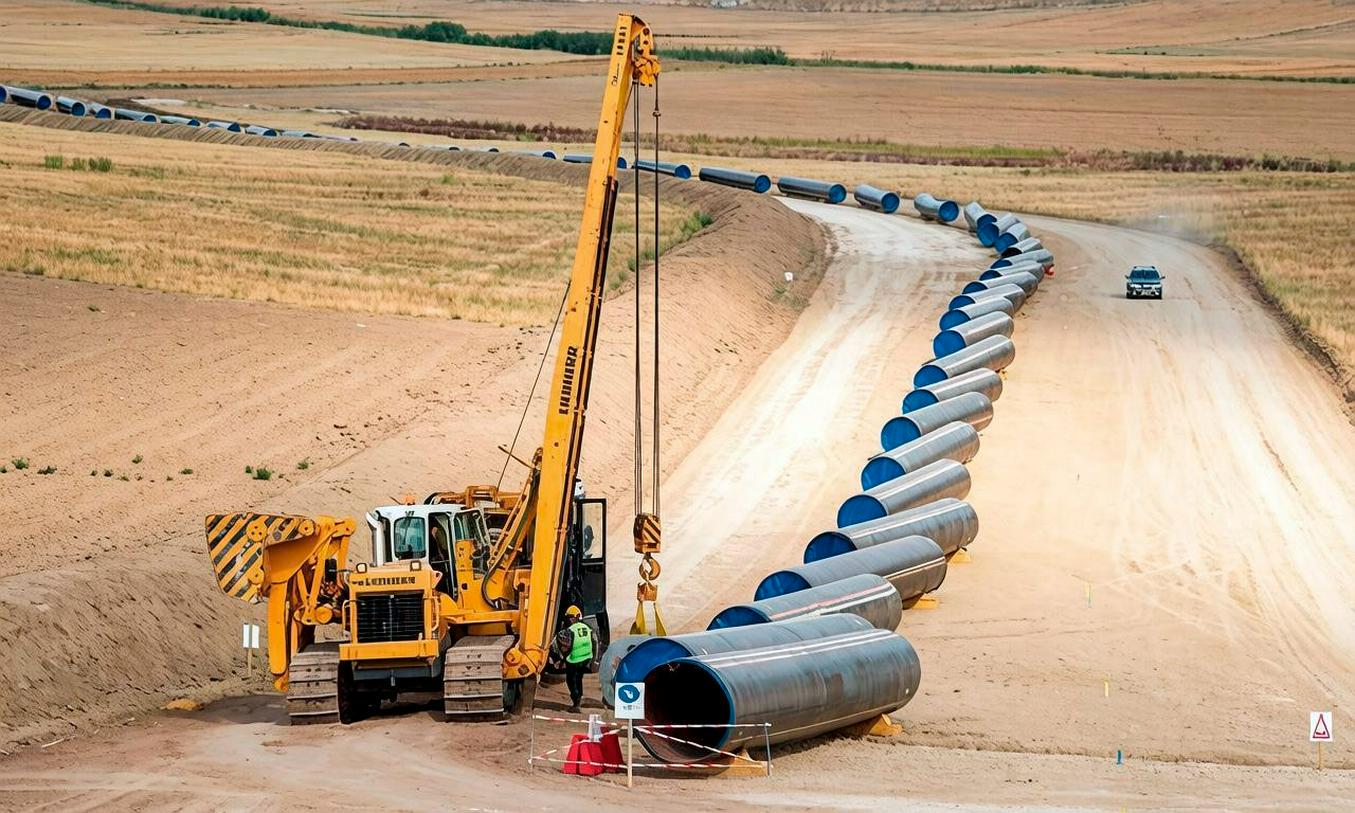
The talks centered on advancing the Turkmenistan–Afghanistan–Pakistan–India (TAPI) gas pipeline, with particular attention to the Serhetabat–Herat section, the project's key stretch on Afghan territory. Officials noted that roughly 300 units of modern specialized equipment are currently deployed to complete this segment. Citing Abdul Ghani Baradar's office, the Afghan agency DID Press reported that 116 km of pipe have been laid on the Afghan section, of which 38 km are fully buried underground. A further 135 km of the route, including trench clearing and engineering site preparation, has been fully readied for pipe-laying.
Construction of this first Afghan section, spanning 153 km, began on September 11, 2024. Under the approved timeline, the main line to Herat is due to be completed by the end of 2026. Field surveys and design work for Herat's internal gas distribution network are expected to start in the near future. Around 700 Turkmen specialists from Turkmengaz are currently working on the project, and 17 international contracts have been signed for equipment procurement.
Ashgabat regards gas and electricity supplies to Afghanistan as the foundation of a long-term energy partnership. Turkmen officials say the initiative could spur the development of industrial zones in Herat province, generating jobs and driving regional economic growth. Gas deliveries to local thermal power plants are also expected to help Afghanistan cut its reliance on imported electricity.
TAPI envisions a pipeline with a design capacity of 33 billion cubic meters of gas per year, running from the Galkynysh field in southern Turkmenistan through the Afghan cities of Herat and Kandahar, the Pakistani cities of Quetta and Multan, and on to Fazilka in India. The full route will stretch about 1,800 km, of which 214 km will pass through Turkmenistan, 774 km through Afghanistan and 826 km through Pakistan to the Indian border. The project's operator, TAPI Pipeline Company Limited, is majority-owned by Turkmengaz, which holds an 85% stake; the remaining 15% is split among state corporations in Afghanistan, Pakistan and India. The pipeline's preliminary cost is estimated at $10 billion.
Gas for the pipeline will be drawn from Galkynysh, one of the world's largest gas fields, with estimated reserves exceeding 27 trillion cubic meters. In April 2026, Turkmengaz and China's CNPC launched the fourth phase of the field's development, including new production facilities and drilling operations expected to lift commercial output to 10 billion cubic meters per year.