The armed group «Sepahiyan-e Mihan» («Warriors of the Homeland») briefly seized control of the Yaftali-Sufla district in Afghanistan's Badakhshan province late Friday night, July 17. According to Afghanistan International, citing local sources, this marks the first time Taliban opponents have captured a district administrative center since the movement returned to power in August 2021.
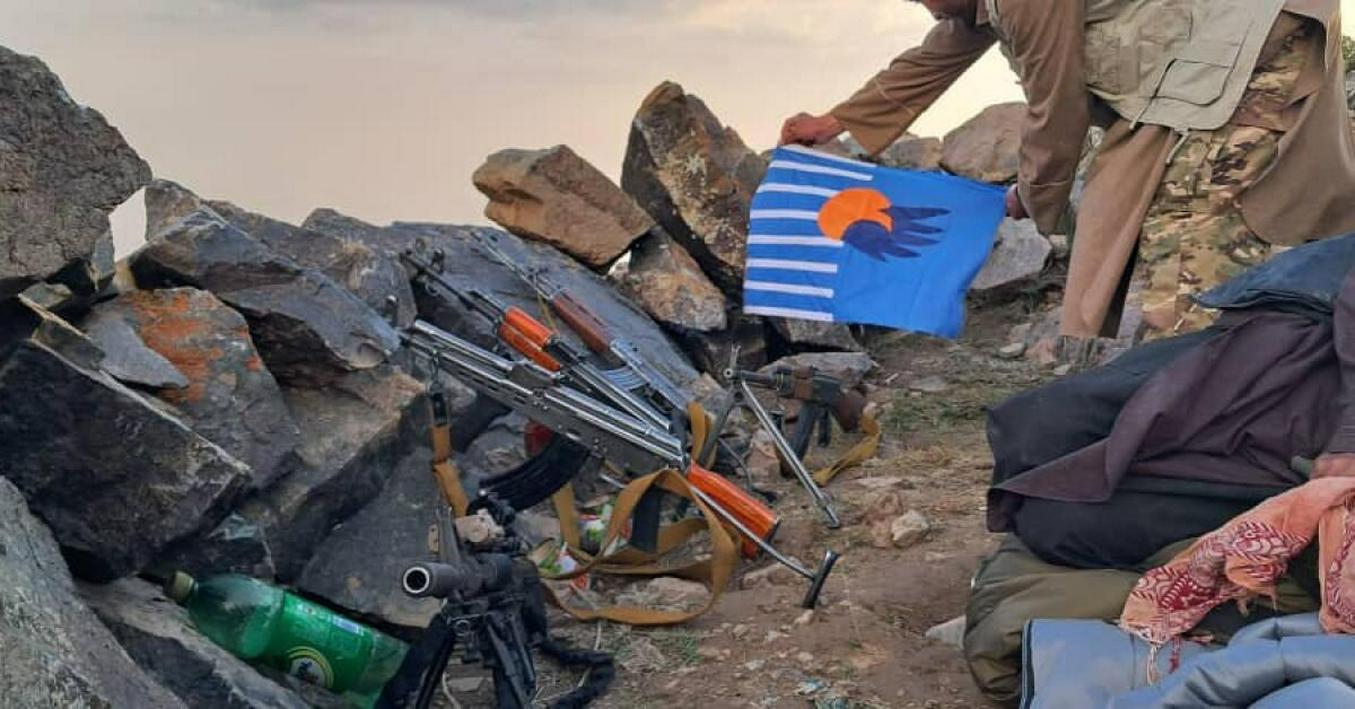
The television channel reported that early in the morning, between 20 and 25 armed fighters occupied the district administration building, the police department, and the intelligence office after a brief firefight, raising their flag over the complex. The attackers disarmed Taliban personnel on site, seized weapons, military equipment, and government vehicles, then withdrew from the district before reinforcements arrived.
Some sources claim the rebels took several Taliban members with them, though this has not been independently confirmed. No casualty reports have emerged so far.
The Taliban acknowledged the attack. A spokesman for the Badakhshan police command told DW's Afghan service that «irresponsible and malicious armed individuals» attacked the district center while its leadership was on leave. According to the Taliban administration, security forces arriving on the scene drove out the attackers «within a few hours,» detaining some while continuing to search for the rest. Reinforcements have since been deployed to Yaftali-Sufla, located near the provincial capital Faizabad, and helicopters are now patrolling the area.
Little was previously known about «Sepahiyan-e Mihan»; this attack appears to be its first public action. A source for Etilaat Roz says the unit is commanded by Abdul Qayum Malang, a former special forces member of the previous republican government. Footage circulating on social media shows a blue flag raised over the district administration building in place of the Taliban's white banner.
The emergence of «Sepahiyan-e Mihan» points to a qualitative shift in the structure of anti-Taliban resistance. According to Afghanistan International, the movement presents itself as independent, drawing together civilian activists disillusioned with the regime, former career Afghan military personnel, and local Badakhshan residents who coordinate with ex-mujahideen commanders. The rebels cite harsh repression by central authorities as their main motivation.
Russian Afghanistan expert Andrey Serenko, head of the Center for the Study of Afghan Policy, reports, citing local sources, that anti-Taliban protests have broken out in three additional Badakhshan districts — Shahr-e Buzurg, Khash, and Tagab — where some residents have openly voiced support for the rebels' actions. The scale of these protests remains difficult to assess, and Taliban officials have not commented on them. The «Green Trend of Afghanistan» movement, led by former First Vice President and ex-intelligence chief Amrullah Saleh, has already issued congratulations to the «Warriors of the Homeland."
Badakhshan has remained one of Afghanistan's most unstable provinces in recent months. Afghanistan International notes rising tensions between local Taliban commanders and forces deployed from other provinces, along with disputes over control of mines and revenue streams, including from drug trafficking. Local residents are increasingly voicing dissatisfaction with the presence of Pashtun Taliban fighters from other parts of the country in the province.