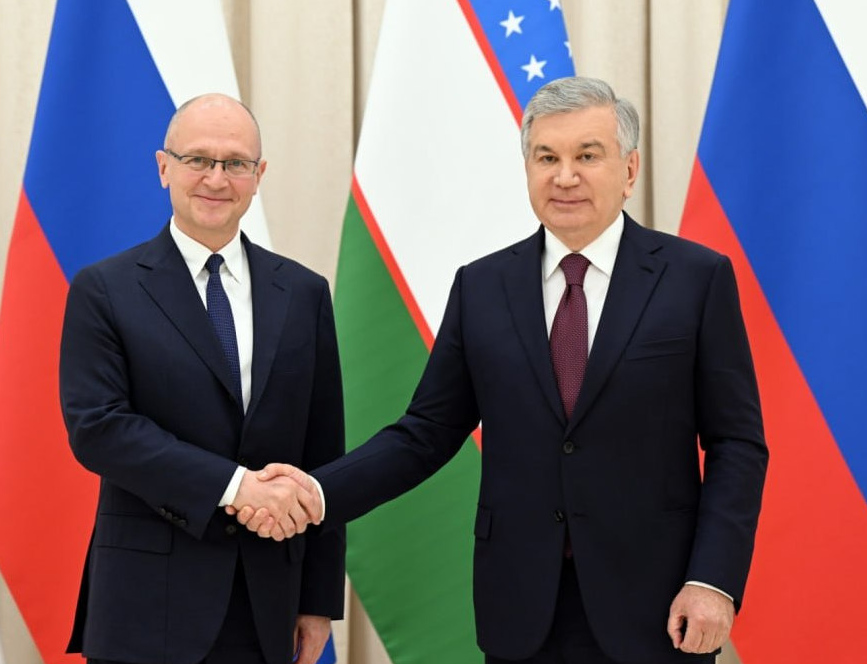
 Sergei Kiriyenko and Shavkat Mirziyoyev, April 15, 2026. Photo: UzA
The First Deputy Chief of Staff of the Russian Presidential Administration, Sergei Kiriyenko, arrived in Tashkent on April 15 for a very specific reason. When it is the first deputy head of the Kremlin administration who travels to Uzbekistan, rather than an ordinary minister or deputy prime minister, it always signals that the discussions involve serious matters, and not always public ones.
Officially, everything sounded smooth: the growth of trade turnover, major joint projects, and cultural ties were discussed. Notably, the visit began not with negotiations but with a visit to Victory Park in Tashkent, where the Russian delegation laid flowers at the “Ode to Resilience” monument and visited the Museum of Glory. The symbolism is clear: shared historical memory is another instrument of influence, and Kiriyenko knows how to use it.
In Moscow, this man is responsible for more than just domestic policy in the traditional sense. After 2022, Kiriyenko became the chief ideological curator of the “new territories”—the Ukrainian regions occupied by Russia. He personally visited Mariupol, Kherson, and Melitopol, where he oversaw what the Kremlin calls “integration”: appointing loyal officials, building administrative structures, and imposing Russian educational and ideological standards.
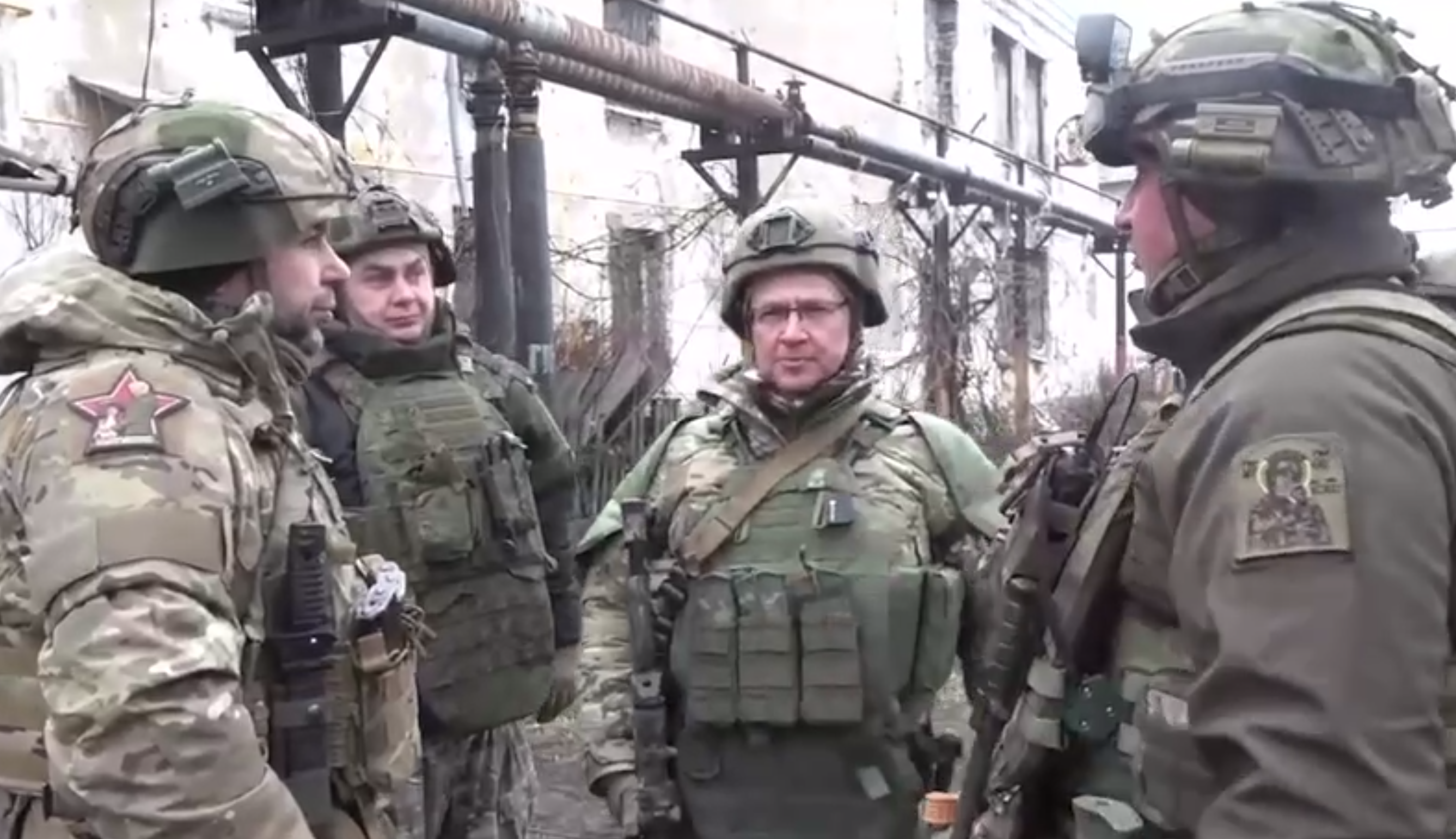 Sergei Kiriyenko walks through the streets of Myrnohrad—a city in the Pokrovsk district of Ukraine’s Donetsk region—with a rifle in his hands. Still from an official video, March 2026.
Recently, video footage was released showing Kiriyenko walking through the “liberated” and completely destroyed Ukrainian city of Myrnohrad with a rifle in his hands. For an official of his rank, this is a demonstrative gesture: I am not just an administrator, I am part of this war.
That is precisely why his visits to post-Soviet capitals are perceived very differently from those of ordinary diplomats.
In reality, the Tashkent visit had several important objectives. First, Moscow wants to understand to what extent Uzbekistan still remains “one of its own.” After all, Shavkat Mirziyoyev is pursuing an independent policy, skillfully balancing between Russia, China, Turkey, and the West: a year ago, the “Central Asia — European Union” summit was held in Samarkand; more recently, Mirziyoyev successfully hosted the leader of Turkey; and shortly before Kiriyenko’s arrival, the Uzbek president’s eldest daughter and head of his administration, Saida Mirziyoyeva, held a series of high-level meetings and negotiations in the United States, where she launched the U.S.–Uzbekistan Business Council.
👆 And today, it is important for the Kremlin that Tashkent does not drift too far away. And Kiriyenko is one of those people who knows how to remind—softly but clearly: “we see everything.”
Second, the talks almost certainly focused on real industrial cooperation and on how Russia can continue to use Uzbekistan under sanctions—as a convenient platform for production and for circumvention schemes. The parallel import mechanism in Russia has been extended through the end of 2026, and Central Asian routes remain critically important for it.
And third, a topic traditional for Kiriyenko: “soft power”—education, youth, culture, the Russian language. This is not abstract: on the very day of his arrival, the Russian delegation visited the Tashkent branch of the Moscow Engineering Physics Institute (MEPhI), where they met with students. The day before, the same venue hosted a presentation of the International Youth Festival 2026, organized by Russia, attended by around 300 physics students. Uzbekistan has a very large young population, and it suits Moscow for them to continue looking toward Russia, not only toward Ankara or Washington.
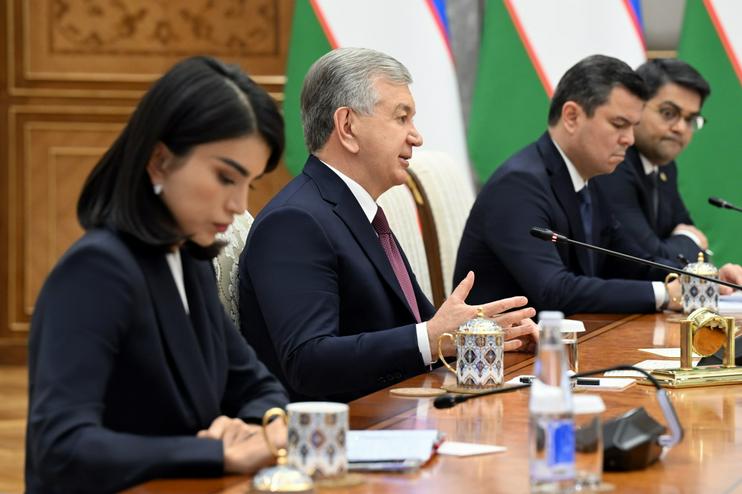 President of Uzbekistan Shavkat Mirziyoyev and the head of his administration, Saida Mirziyoyeva, during a meeting with Sergei Kiriyenko. Photo: President.uz
This interest directly intersects with the issue of labor migration, which Mirziyoyev and Kiriyenko likely also discussed during their meeting. As well as matters of collective security and preparations for a future visit by Vladimir Putin to Uzbekistan. The last time the Russian president visited Tashkent was in May 2024, and the question of the next visit is clearly on the agenda.
They also spoke (according to UzA) about “enhancing cooperation in the fields of digital technologies and information policy, the development of mass media and civic initiative.” The wording sounds neutral and even progressive—but behind it lies a very specific Russian model. Is it worth recalling that by 2026 Russia has built one of the most stringent systems of state digital control?
Roskomnadzor, which gained expanded powers after 2019 under the “sovereign Runet” law, now has the technical capability to completely isolate the Russian segment of the internet from the global network—and has already conducted such experiments: slowing down YouTube, blocking services, intercepting traffic. Since February 2022, thousands of independent media outlets have disappeared from the Russian internet, major Western platforms have been blocked, and even the word “war” in reference to events in Ukraine is criminally punishable. “Civic initiative,” in the Russian understanding, is an initiative approved by the state.
So what does it amount to? That this very model—one in which the digital environment and media space serve not to inform, but to control—is what Kiriyenko, as one of its architects, is offering Uzbekistan as a template for “cooperation”?..
In short, this was not just a “working meeting.” It was a classic Kremlin inspection and pulse-check—carried out by someone who is involved not only in political engineering, but also in the direct administration of Russia’s “new” territories. Kiriyenko wanted to make sure of the extent to which Uzbekistan still remains within Russia’s sphere of influence.
And what needs to be done to keep Uzbekistan in that sphere for as long as possible.
-
 14 October14.10Digital DependenceYandex Data Center Attacks Expose Kazakhstan's Digital Vulnerability
 -
 13 October13.10From Nakhodka to the Persian GulfIran Courts the CIS and the Eurasian Economic Union
 -
 17 September17.09Summit of Morning FreshnessCritical minerals, artificial intelligence — what else was discussed at the “Central Asia–Korea” meeting
 -
 02 September02.09Who Are You, Mr. Vice President?From Analyst to Kazakhstan's Second-in-Command: How Erlan Karin's Views Have Evolved
 -
 01 September01.09Just Look, Don't Say You Didn't SeeAn Islamic civilization media forum in Tashkent gathered over 300 journalists from nearly 50 countries
 -
 30 August30.08The Real Intrigue Comes LaterObservers and experts assess Kazakhstan’s first elections to the new Kurultai parliament
-
Berit Lindeman, Secretary General of the Norwegian Helsinki Committee, on democracy and the parliamentary campaign in Kazakhstan
-
Human rights defender and journalist Farid Tukhbatullin on the past, present, and future of the Turkmen people
-
The world's tallest dam is being built in Tajikistan on empty reserves and other people's loans
-
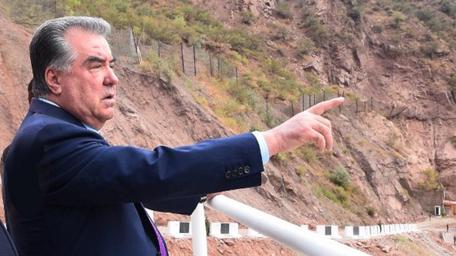
While Emomali Rahmon receives an honorary certificate “from the UN”, the Amu Darya keeps running shallow…