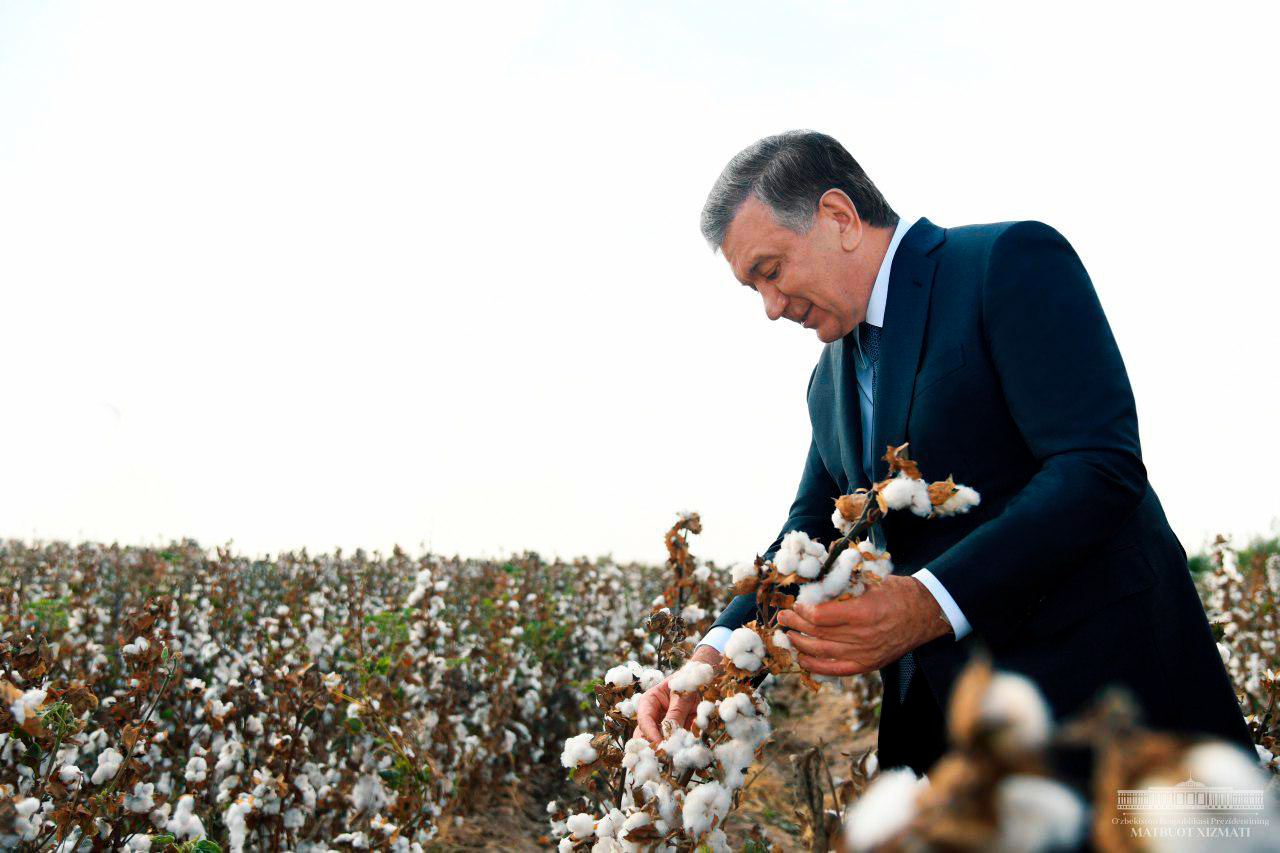
 Archive photo by the press service of the President of Uzbekistan
Uzbekistan has harvested over 5 million metric tons of raw cotton, setting a national record since gaining independence in 1991. President Shavkat Mirziyoyev announced the milestone in a congratulatory message to agricultural workers, the presidential press service reported.
Mirziyoyev called the result «a miracle of New Uzbekistan in cotton growing» and thanked rural laborers, farmers, agronomists, machine operators, and cluster workers.
The president noted that in the 1980s, roughly 2 million hectares were allocated to cotton farming across the country, with average yields not exceeding 3 metric tons per hectare. In 2000, cotton fields covered 1.4 million hectares, yielding a total harvest of 3 million metric tons. In recent years, total acreage has shrunk by 38%, while average yields have climbed from 2.1 to 5.6 metric tons per hectare—a 2.7-fold increase.
Yields reached 7 metric tons per hectare on nearly 400,000 hectares and 10 to 11 metric tons per hectare on around 70,000 hectares. Among the top producers, the president highlighted Anorboy Eshmatov from Pakhtakor district and Ulugbek Supiyev from Jarkurgan district, both of whom gathered 11 metric tons per hectare.
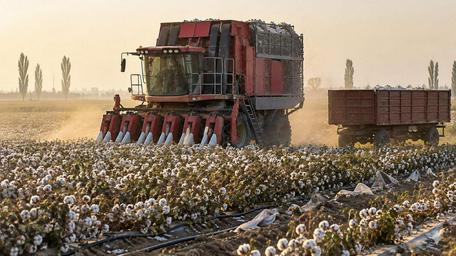
Mirziyoyev highlighted mechanization as a major factor. This season, more than 3,000 cotton pickers gathered 85% of the crop within 30 to 35 days. In the Jizzakh and Syrdarya regions, the mechanization rate reached 100%.
According to Mirziyoyev, key drivers behind the success included establishing the Cotton Farming Council, adopting non-traditional cultivation methods, and halving operating costs through digitalization and agricultural drones. Other vital contributors included the prudent use of state financial resources, enhanced payment discipline, reformed subsidy systems, and the introduction of crop insurance.
Cotton farmers are projected to earn 13 to 14 trillion soums (over $1 billion) in net profits this year. Targets for next year aim to lift average yields to 6.5–7 metric tons per hectare by expanding high-yield crop varieties and using agricultural drones, water-saving technologies, and artificial intelligence.
The president underscored the decisions made several years ago to end the state cotton procurement quota, dissolve the industry monopoly, and ban the forced mobilization of teachers, students, and public-sector workers for field labor. The statement noted that during a recent World Cotton Day forum in Tashkent, scientists and specialists from over 30 countries proposed establishing a World Cotton Center in Uzbekistan.
▪️ Shavkat Mirziyoyev signed a decree scrapping the state raw-cotton procurement quota in March 2020. Contract farming agreements with private cotton-textile clusters replaced the old state-order system, allowing producers to sell their cotton on commodity exchanges. Target projections and contract quotas still guide the sector, with the 2026 production target originally set at 4.5 million metric tons of raw cotton.