 Photo by akorda.kz.
Kazakhstan has proposed developing the US “Washington Model” for the safe and responsible development of artificial intelligence into an international treaty under UN auspices. President Kassym-Jomart Tokayev instructed the AI Development Council to prepare specific proposals from Kazakhstan, which are expected to be presented at the G20 summit in Miami in December 2026.
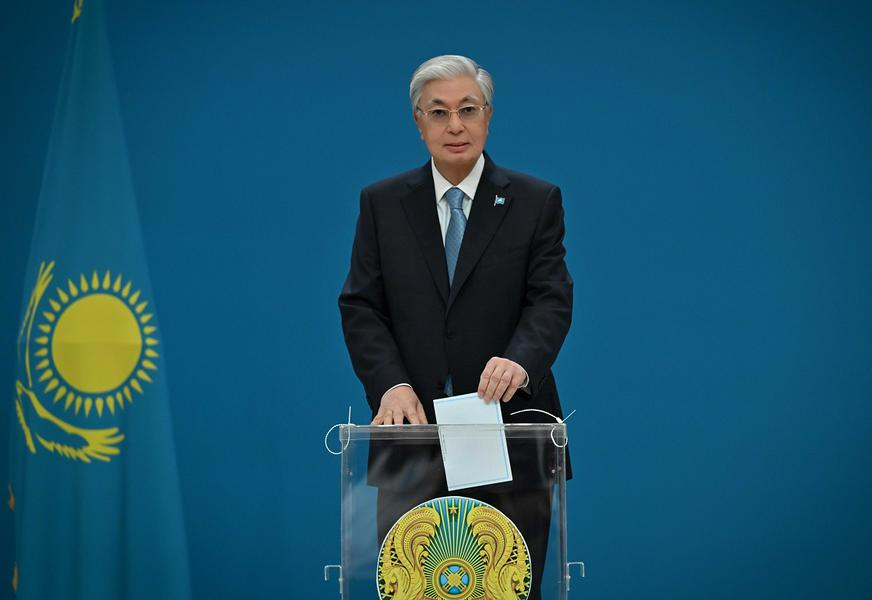
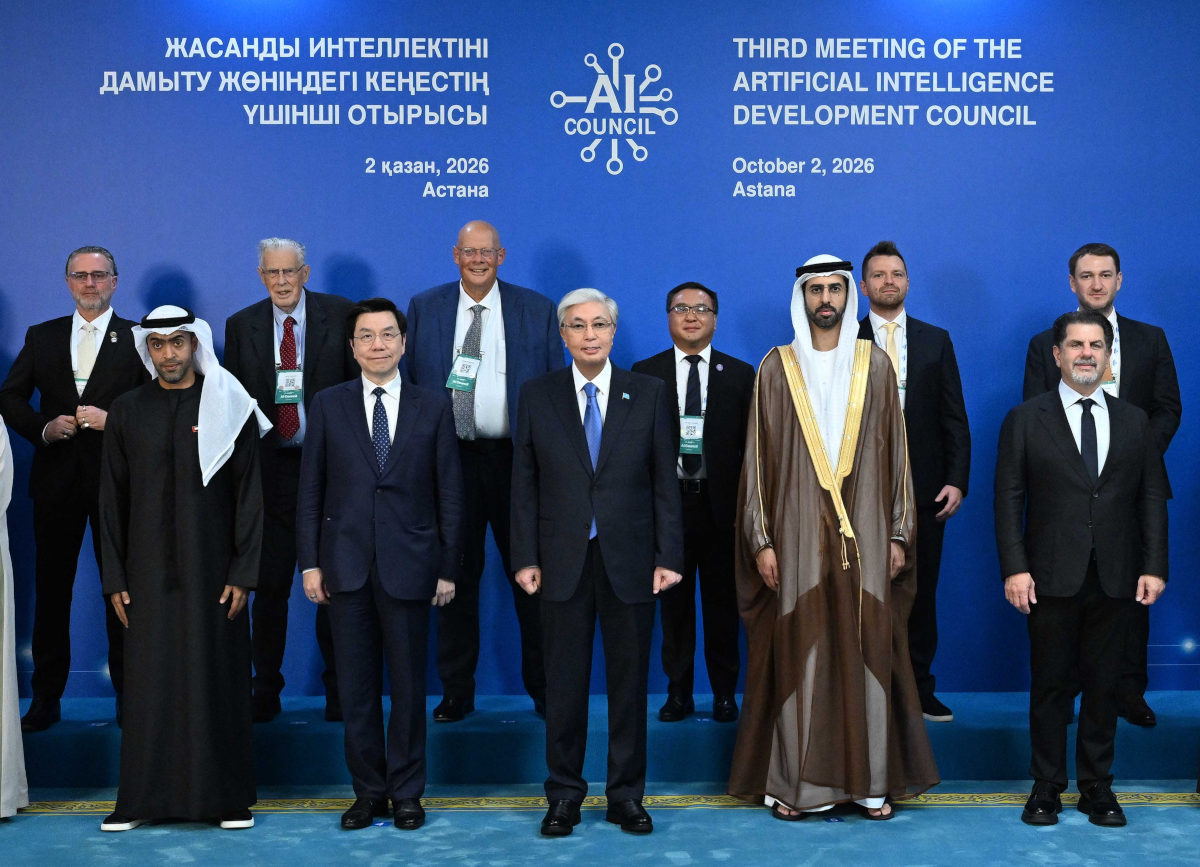
Tokayev said this on October 2 at the third meeting of the Artificial Intelligence Development Council at Akorda. The meeting focused on the digital transformation of industry, but in the concluding part of his speech, the president turned to international AI regulation.
His proposal builds on an initiative launched by US President Donald Trump and major American technology companies, which on September 29 signed a voluntary agreement in Washington on the safe and responsible development of advanced AI models.
The “Washington Model” cited by Tokayev is not yet international law or a treaty binding on states. The document signed by Trump, Google, Anthropic, Meta, OpenAI, xAI and Nvidia represents a voluntary commitment by companies developing and deploying advanced AI models to establish internal safety-control systems.
The agreement outlines four levels of oversight.
- The first is internal monitoring of models’ capabilities and behaviour during training and deployment. This includes addressing risks related to cybersecurity, biological and chemical safety, and preventing unauthorised AI access to technical systems.
- The second is the creation of a dedicated in-house team responsible for monitoring those safeguards and responding to problems that emerge.
- The third level is independent external verification. Companies commit to working with external auditors or evaluators who would independently assess whether their control and monitoring systems are functioning effectively.
- The fourth is oversight by an independent board committee. It would receive reports from internal teams and external auditors and monitor the remediation of identified shortcomings.
Participants also agreed to meet regularly to develop common AI-safety standards and best practices. The document notes that its principles could eventually be incorporated into laws or regulations. For now, however, it remains a set of voluntary corporate commitments rather than legally enforceable obligations.
Tokayev proposed taking this corporate model to the international level. In his view, AI-related risks already transcend national borders and require coordinated action by governments and businesses.
After expert review, the Kazakh president said, the US agreement could serve as a model for global AI governance.
“I believe that the ‘Washington Model’ could become the basis for an international treaty under the auspices of the UN,” Tokayev said. Kazakhstan is ready to offer a platform for international dialogue, he added, while the AI Development Council has been instructed to prepare specific proposals for the country’s international initiative “as soon as possible.”
“Our shared vision will be presented at the G20 summit in Miami this December,” Tokayev said.
Astana’s proposal, therefore, is not simply to extend the US agreement to other countries. It envisages a possible shift from voluntary self-regulation by major technology companies to international rules negotiated by states within the UN framework.
The initiative is part of Kazakhstan’s broader AI-development strategy. Under the Digital Kazakhstan programme through 2029, the country is building a national AI ecosystem, while Tokayev has described artificial intelligence as a tool for modernising industry and increasing productivity.
According to Akorda, Kazakhstan’s industrial output totalled about 46 trillion tenge in the first eight months of 2026, while manufacturing grew 8.4 percent year on year over the same period.
At the October 2 meeting, Tokayev also instructed the government and Samruk-Kazyna to identify enterprises where core business processes could be comprehensively restructured through AI, before scaling successful solutions nationwide. He separately called for sector-specific industrial databases based on unified standards for quality, interoperability and secure use.
Commercial secrets, strategic information and critical data must remain protected, he said. The council itself was established as an advisory body to develop AI-policy proposals, legislative recommendations and international cooperation in the field.