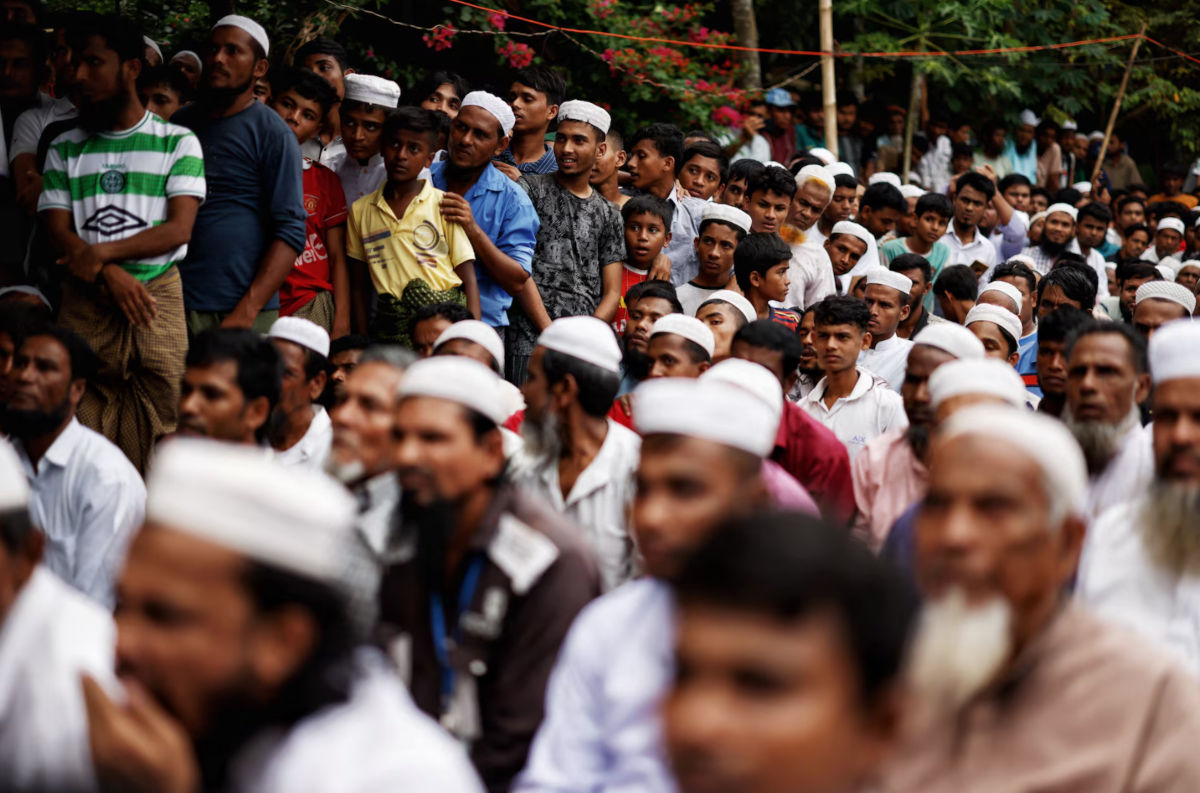
 Rohingya refugees in Bangladesh, November 2026. Photo: REUTERS.
The International Court of Justice ruled on November 19 that Myanmar is responsible for the genocide of the Rohingya Muslim minority during a 2017 military crackdown in Rakhine State. As Reuters reports, the court ordered the country to pay reparations and ensure the safe return of refugees.
The 9–6 ruling stems from a lawsuit filed by The Gambia in 2019. Presiding Judge Yuji Iwasawa delivered the verdict in The Hague, with a live broadcast streamed by the UN. The court dismissed Myanmar's defense that the military's actions constituted a legitimate counter-insurgency operation.
Judges found that security forces killed thousands of civilians, carried out mass rapes and other sexual violence, inflicted extreme brutality on children, and attacked individuals fleeing to Bangladesh. The military conducted mass executions of men and boys while torching and razing Rohingya villages. According to the court's findings, evidence confirms the deaths of approximately 10,000 members of the minority group.
To establish genocide, the court had to prove the intent to destroy, in whole or in part, a group protected under the Genocide Convention. Judges concluded that the only reasonable inference from Myanmar's pattern of conduct was an intent to destroy a substantial part of the Rohingya population in northern Rakhine. They also noted that the military systematically spread hate speech targeting the group.
The amount of compensation will be determined at a later stage. In addition to paying damages, Myanmar must guarantee that displaced Rohingya can return safely and with dignity to their homes and reunite with their families. Following the 2017 military campaign, at least 700,000 people fled to neighboring Bangladesh.
👉 The Rohingya are a predominantly Muslim ethnic minority in Myanmar, historically residing in Rakhine State in the country's west, along the border with Bangladesh. The majority of Myanmar's population adheres to Buddhism. Although the Rohingya have lived in the region for centuries, the authorities refuse to recognize them as an indigenous ethnic group, and the 1982 Citizenship Law effectively rendered most of them stateless. The persecution stems from deep-seated religious hostility and ethnic discrimination: the Rohingya are branded as foreign interlopers from Bangladesh and denied belonging. This is not merely a sectarian conflict, but decades of state-sponsored persecution that culminated in a campaign of mass murder and expulsion.
The ruling is final and cannot be appealed, although the court possesses limited mechanisms to enforce compliance. The proceedings address state responsibility: the International Court of Justice adjudicates disputes between nations and does not issue criminal verdicts against individuals.