 Photo courtesy of the press service of the Ministry of Agriculture of Uzbekistan
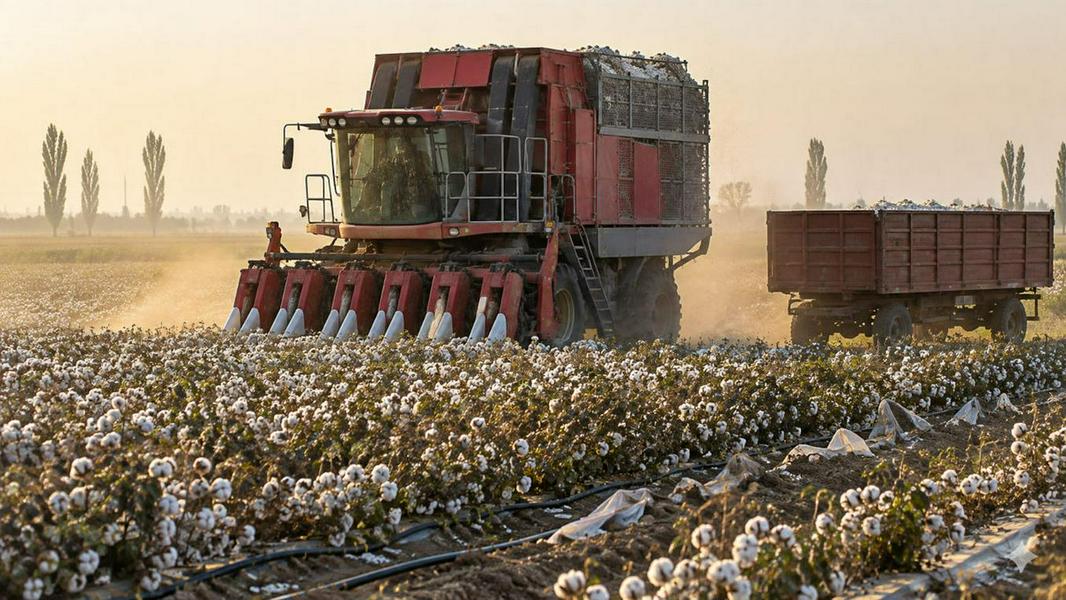
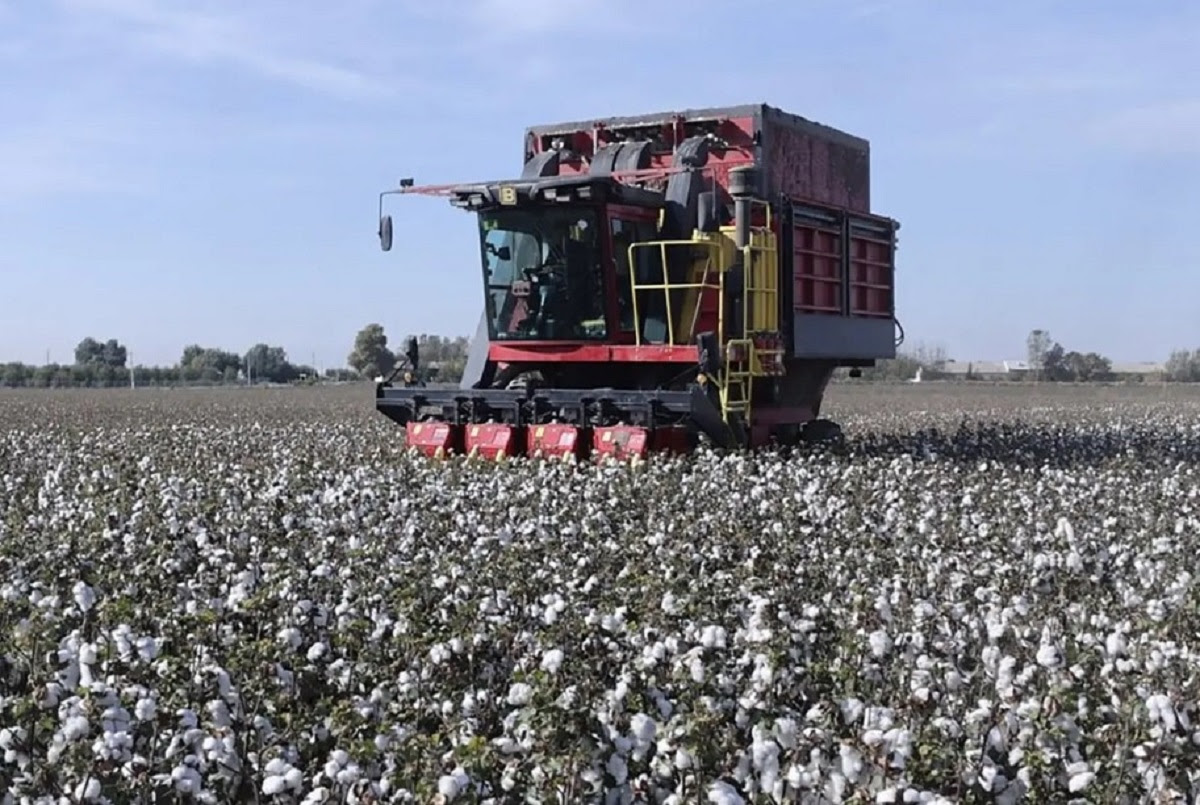
In 2027, Uzbekistan plans to phase out manual cotton picking entirely, making the harvesting process 100% mechanized. Minister of Agriculture Ibrokhim Abdurakhmonov announced the plan, as reported by Gazeta.uz.
The official noted that in 2026, the country harvested over 5 million metric tons of raw cotton, with machinery accounting for 75–80% of the total. The Syrdarya and Jizzakh regions have already transitioned entirely to mechanized harvesting. Around 3,000 cotton harvesters operated during this year's harvest, half of which were acquired in 2026 alone.
According to the minister, his agency is carrying out a directive from President Shavkat Mirziyoyev requiring cotton to be grown on an economically viable basis and harvested exclusively by machines.
Abdurakhmonov explained that manual labor was used on small plots and plantations located between orchards, where large agricultural machinery cannot operate. The total area of such fields does not exceed 53,000 hectares. Authorities plan to take these lands out of cotton cultivation in the future and repurpose them for vegetables and other crops.
The agriculture minister emphasized that the transition to mechanized harvesting will not strip field workers of their livelihoods, noting that projected growth in cotton yields will create new employment opportunities across the textile industry.
The minister added that farmers actively deployed new agrotechnologies and crop varieties resistant to the cotton bollworm pest this year. As a result, average yields reached 7 metric tons per hectare across nearly 400,000 hectares, while roughly 70,000 hectares produced 10 to 11 metric tons per hectare.
However, not all farms adopted these innovations, leaving some lagging behind national averages. The Ministry of Agriculture has entered such growers into a dedicated registry, categorizing them into green, yellow, and red tiers.
Abdurakhmonov also highlighted the adoption of foreign practices, particularly from China, Brazil, Argentina, and Turkey. Special emphasis was placed on high-density planting techniques widely used in China's Xinjiang Uyghur Autonomous Region. There, according to the minister, yields average 9 metric tons per hectare at a planting density of around 250,000 plants per hectare.
Uzbekistan is preparing to introduce this practice nationwide. Projections aim to raise the average yield across all plantations to 7 metric tons per hectare next year, which experts estimate could push total cotton production past 6 million metric tons.
The minister also underscored that all cotton fiber produced in the republic now remains in the country and is processed at domestic mills. To support this, Uzbekistan currently operates 142 textile clusters and 183 factories.
While raw fiber exports previously brought in around $1 billion, outbound shipments of finished goods now total roughly $4.1 billion. Over the long term, authorities aim to increase that figure to $9 billion, the minister said.