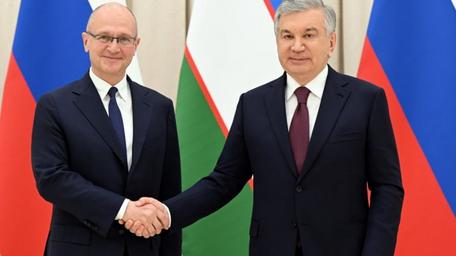
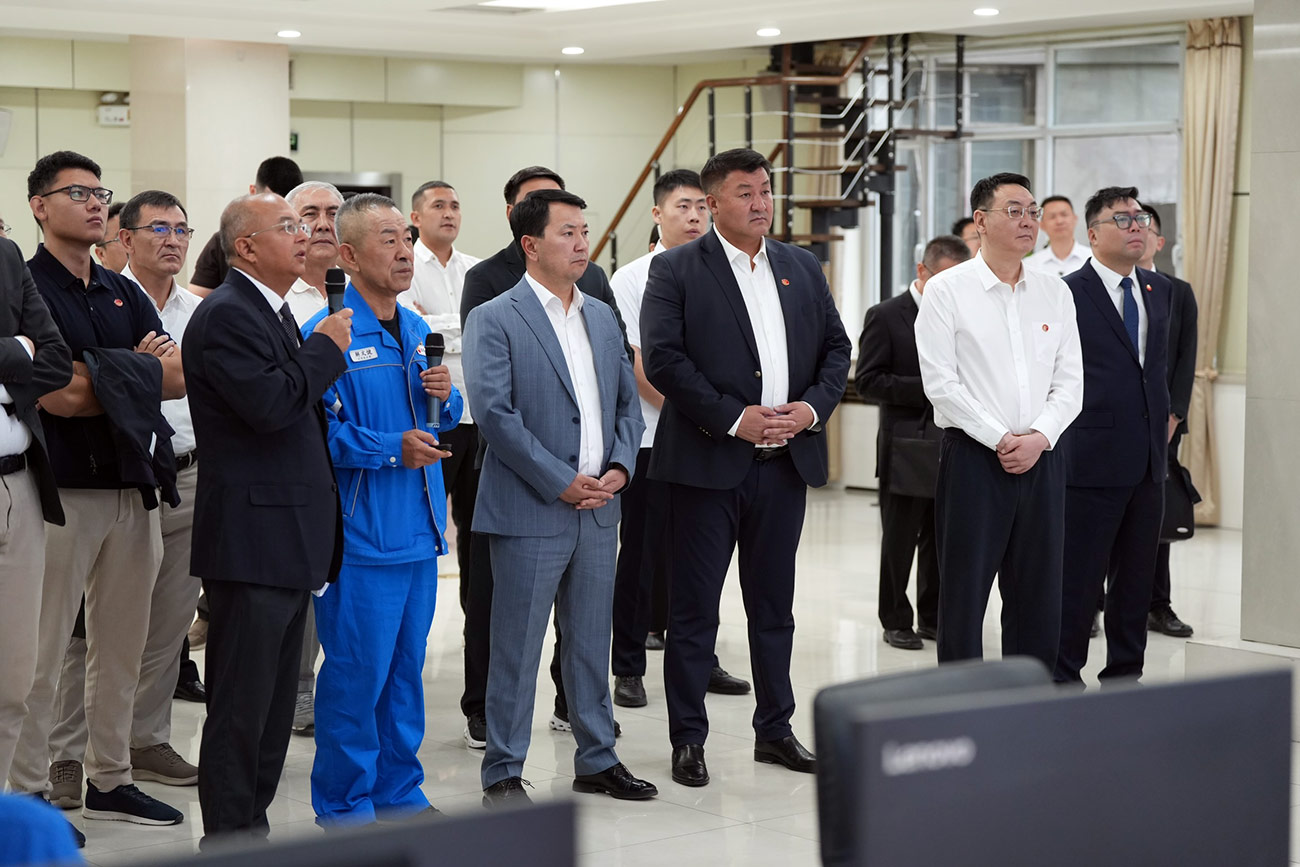
 Photo from the press service of the Kyrgyz government
Kyrgyz companies have signed agreements with China National Petroleum Corporation (CNPC) on the supply of petroleum products, the Kyrgyz government's press service reported on August 19.
The documents were signed after talks in Urumqi during a working visit by Deputy Chairman of the Cabinet of Ministers Erlis Akunbekov to China's Xinjiang Uyghur Autonomous Region (XUAR). The delegation included the heads of more than ten Kyrgyz companies operating in the petroleum products market.
At a meeting with CNPC General Director Luo Yizhou, the two sides focused on supply arrangements through Kunlun Logistics, a CNPC subsidiary that handles international transportation and warehouse logistics for cargo tied to oil fields, crude oil, natural gas, and refined products.
The parties also discussed ways to streamline transportation. Kyrgyzstan's Ministry of Energy is to coordinate the overall effort, while the Ministry of Transport and Communications and the Customs Service will ensure the swift passage of oil cargo across the border, and the Ministry of Foreign Affairs will simplify visa processing for drivers.
Luo Yizhou said CNPC was ready to expand cooperation with Kyrgyzstan, improve customs clearance, and jointly build an uninterrupted China–Kyrgyzstan energy logistics corridor.
Akunbekov stressed the importance of direct agreements between Kyrgyz companies and CNPC, given conditions on the Central Asian oil market.
«We included in the delegation the heads of companies working with petroleum products in Kyrgyzstan, so that every entrepreneur has the opportunity to interact directly with partners and familiarize themselves with the issues and opportunities on the ground,» Akunbekov said a day earlier during a meeting with Tian Hongbin, deputy director of China Petroleum & Chemical Corporation (Sinopec).
At those talks, Tian Hongbin confirmed Sinopec's readiness to carry out previously agreed joint projects and to expand cooperation into new areas of the oil industry.
Working groups made up of government officials and company representatives discussed the supply of fuels and lubricants to Kyrgyzstan, including transportation, customs clearance, trade turnover, and related matters.
Akunbekov's delegation also met with Chen Xiaojiang, secretary of the XUAR Communist Party Committee. They agreed to simplify and accelerate the supply of fuels and lubricants from China to Kyrgyzstan.
CNPC and Sinopec are China's largest state-owned oil and gas corporations. They explore for, extract, and refine oil and natural gas, and transport petroleum products through international pipeline systems.
Kyrgyzstan consumes about 2 million tons of fuels and lubricants a year and imports nearly 95% of that volume from Russia. In recent months, supplies from Russia have been disrupted by Ukrainian drone strikes on Russian oil refineries. Against that backdrop, gasoline and diesel prices in Kyrgyzstan have risen, and some filling stations have run short of AI-95 gasoline and diesel.
In July 2026, President Sadyr Japarov instructed the Cabinet of Ministers to secure stable fuel supplies and prevent shortages. To offset the gap between purchase and domestic prices, the government introduced a fuel import subsidy scheme running from May 25 to September 30.
By mid-July, the first batches of petroleum products began arriving in Kyrgyzstan from China and Belarus. Bishkek is also in talks with Kazakhstan and Uzbekistan on supplies, and has reached an agreement with Russia on deliveries of 100,000 tons of gasoline a month. The deals with CNPC and Sinopec should broaden import sources and reduce the country's dependence on a single supplier.