 Photo by the press service of the President of Kazakhstan
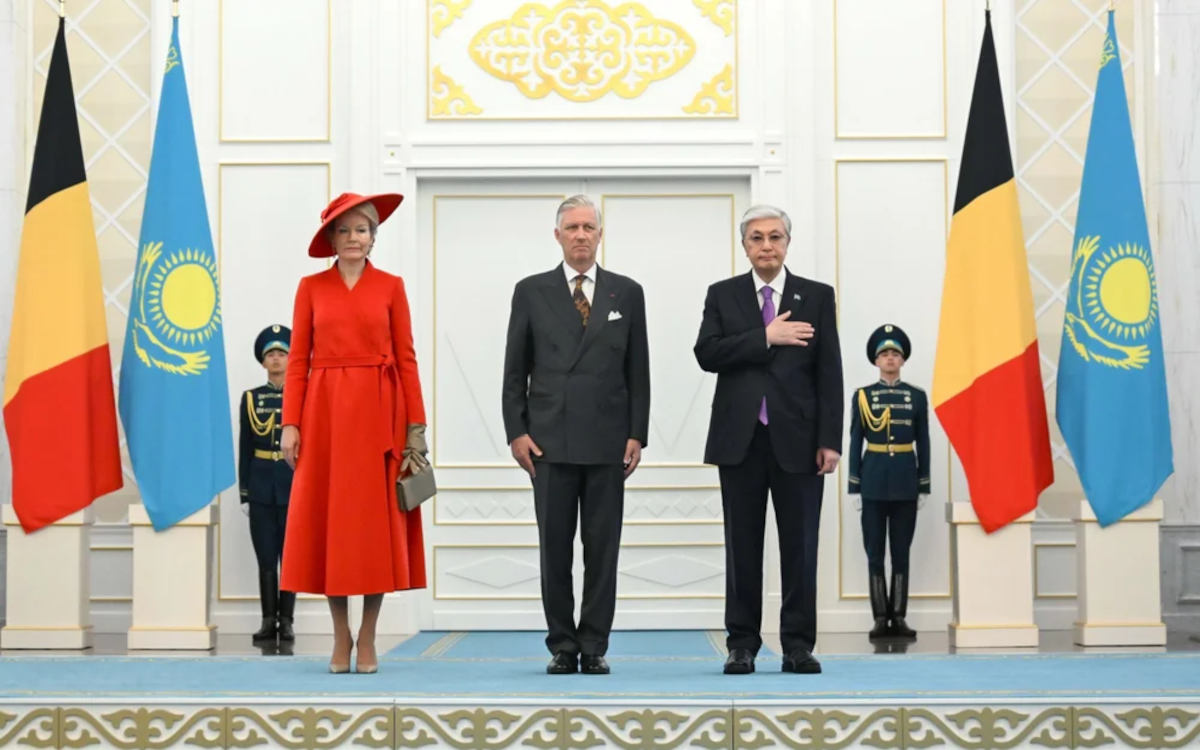
King Philippe and Queen Mathilde of Belgium arrived in Astana on October 12 for a state visit. Kazakh President Kassym-Jomart Tokayev greeted them at the Akorda residence. The visit runs until October 14 and is the first state visit by Belgian monarchs to Central Asia.
According to Kazinform, a guard of honor welcomed the royal couple, and the presidential orchestra played the national anthems of both countries. Kazakh Air Force fighter jets escorted the monarchs' aircraft as it crossed Kazakhstan's airspace.
The Belgian delegation includes government officials and representatives of business, universities and the media. The program features high-level talks, the fourth meeting of the Kazakhstan–Belgium Business Council and a forum of university rectors from both countries, as well as events in Astana and Almaty. A joint statement and the signing of bilateral documents are expected at the end of the visit.
Trade and investment will be a key area of cooperation. Bilateral trade has grown from €220 million in 2016 to €765 million in 2025. More than 100 Belgian companies operate in Kazakhstan, including firms in the chemical, biopharmaceutical and energy sectors.
Transport and logistics, critical minerals, renewable energy, agriculture, healthcare and artificial intelligence are also named as promising areas. For Kazakhstan, closer ties with Belgium, an EU member state, matter for attracting European investment and expanding its foreign economic relations.
Astana consistently seeks to strengthen relations with Europe's democracies, attract their capital and technology, expand trade and demonstrate its foreign-policy independence. Yet behind the diplomatic talk of multi-vectorness lies a serious contradiction: cooperation with European states has not stopped Kazakhstan from making decisions that advance the interests of Russian security agencies.
The contradiction is especially visible in the cases of Mansur Movlayev and Yulia Yemelyanova, Russian citizens who now risk being handed over to Russian authorities after Kazakhstan denied them asylum.
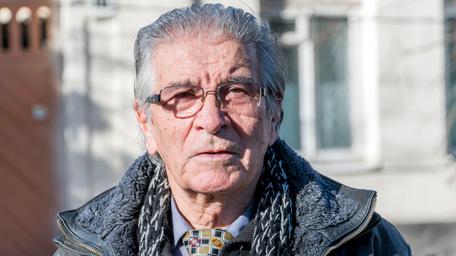
Movlayev, a native of Chechnya, has been in custody in Almaty since May 2025. Russia seeks his extradition on extortion charges, which he denies. Human rights defenders say Chechen security forces previously abducted, arbitrarily detained and tortured him. In February 2026, the UN Human Rights Committee demanded that he not be handed over to Russia until his individual complaint is considered. Nevertheless, on September 10, a Kazakh cassation court upheld the denial of asylum, bringing extradition closer.
Yemelyanova also faces the threat of being handed over to Russia after Kazakh authorities refused her asylum. She was detained at Almaty airport during a transit connection between two other countries. On September 24, 2026, a cassation court confirmed the refusal, opening the way to extradition.
Both cases are examined in detail in a joint appeal by international human rights organizations published on October 5. It was signed by the International Partnership for Human Rights (IPHR), the Kazakhstan International Bureau for Human Rights and Rule of Law, Freedom for Eurasia and the Helsinki Foundation for Human Rights. The groups warn of the risk of torture and other ill-treatment if both are returned to Russia and, in Movlayev's case, of a threat to his life.
These circumstances point to a significant gap between Kazakhstan's foreign-policy declarations and its practice in dealing with Russian law enforcement. While Astana builds partnerships with European states, its decisions in the Movlayev and Yemelyanova cases effectively enable cross-border persecution of people seeking protection outside Russia.
For Kazakhstan's European partners, this is not only a matter of complying with international human rights obligations. It is also a test of whether Astana's proclaimed multi-vectorness means real independence from Moscow. Economic rapprochement with Europe does not by itself guarantee political distance from Russia, especially when it comes to cooperation between security agencies and the fate of people who may face persecution.