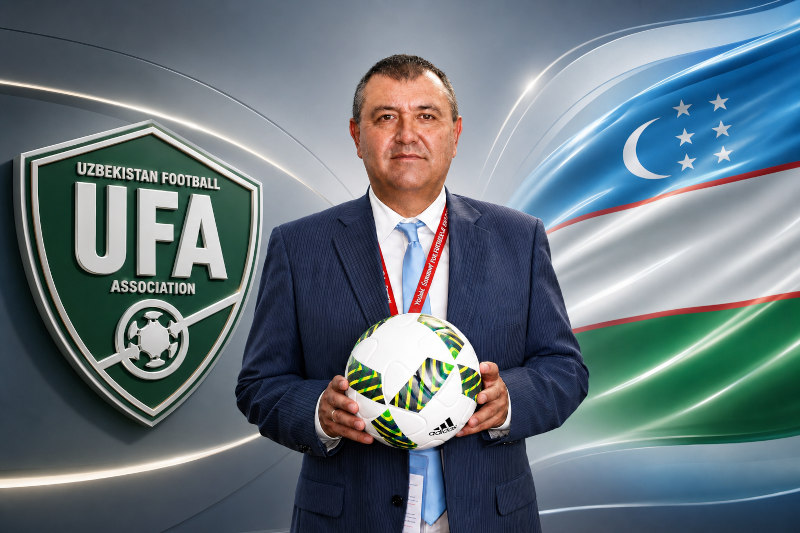
 Alisher Aminov. Photo from Alisher Aminov’s personal archive
The historic qualification of the Uzbekistan national team for the FIFA World Cup finals has become a source of national pride. But Alisher Aminov — an international expert, legal scholar and economist, the author of a comprehensive development program for Uzbek football and a former candidate for president of the Russian Football Union — believes that this is precisely the moment to talk not only about success, but also about systemic problems: shadow mechanisms of governance, incompetent leadership, corruption and the real cost of the new presidential and government resolutions.
— In Uzbekistan, many people see reaching the World Cup as a source of pride and talk about a new experience for Uzbek football. Do you agree with that assessment?
It is an achievement that can and should be a source of pride — one that the entire post-Soviet football world envies, and not without reason. Uzbekistan has become a kind of locomotive, battering ram and example for the countries of the former USSR. If we set aside Ukraine, historically successful in football terms, and Russia, which is blocked on the international stage, then on this scale we simply have no competitors. We are the champions!
But that is the bright, smooth, polished side of the medal. You can hang it around your neck, pin it to your lapel and enjoy the mere fact of its existence until the end of time. No one will take it away, no one will dispute it — even despite the failed performance of Fabio Cannavaro’s team at the World Cup. The only consolation is perhaps that, thanks to the quirks of the fixture calendar, the White Wolves dropped out on the final day of the group stage, finishing ahead in the informal “ranking of losers” not only of Panama and Haiti, but also of Turkey, Scotland, the Czech Republic and Uruguay.
But, as always, the medal has another side. When our national team was still making its way into the top 48, I publicly voiced concerns about the euphoria that would inevitably sweep the country in the event of success. That is exactly what happened. For the fans, euphoria is entirely forgivable: they have the right to rejoice in their team’s success without reservation — they have earned it. After all, conceding five to a Portugal side led by the great Cristiano is hardly a sensation. We are not the first, and we will not be the last.
But projected onto the system of sport and football, onto the national top management, onto our helmsmen, the medal reflects a very different light. The point is that the national team’s participation in the World Cup finals effectively guarantees this crowd an indulgence for at least the next several years. And understandably so: just try leveling any serious criticism at the people under whose leadership Uzbek football has soared higher than the highest peaks of the Tien Shan.
A rare alignment of tournament circumstances, reinforced by the players’ and coaches’ absolute commitment, together with the expansion of the Asian Football Confederation’s quota from four teams to eight, allows them to bask for a long time in the glow of someone else’s glory and cash in on a unique stroke of luck — all without clearing away the pile of problems that are steadily and inexorably shifting from systemic to existential.
— For some time now, there has been talk at the highest level about reforming the sports sector. What is reform, in simple and accessible terms? And why do you believe the process is far removed from reality?
Reform of Uzbekistan’s sports and football sector, like any other reform, is first and foremost about dynamic change in the management system. If those at the top are not brought into line with the demands of the times, everything else is pure fiction. At the same time, it is clear that reform inevitably meets resistance from the existing caste, which has been in place for decades. In the old days this was called sabotage; today people prefer to speak of “trial and error.”
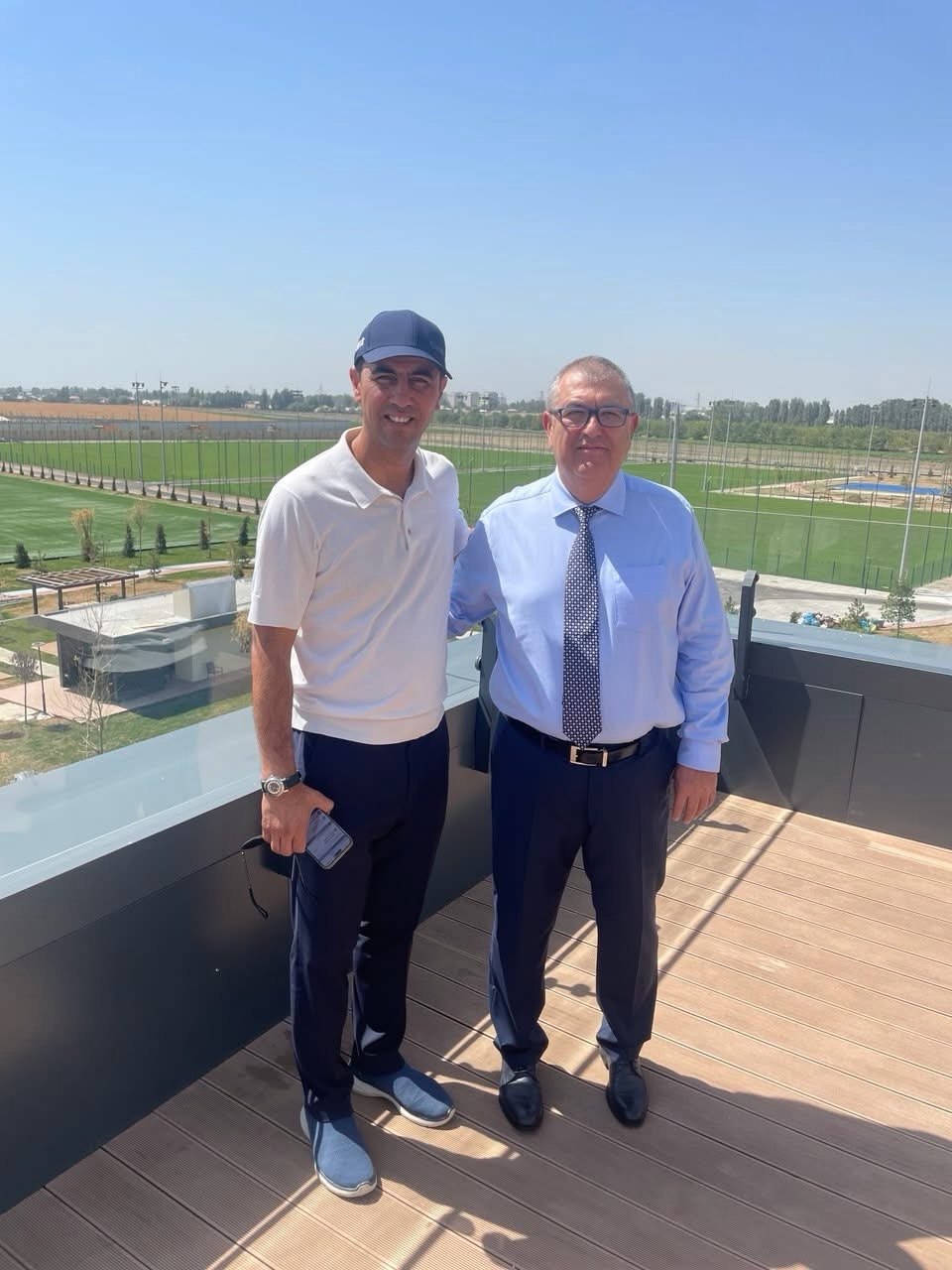 Alisher Aminov and Ravshan Irmatov. Photo from Alisher Aminov’s personal archive
The problem is that sport, and football in particular, is currently being run in Uzbekistan, in my view, by amateurs. When it comes to figures such as the first vice-president of the UFA, Ravshan Irmatov, and the minister of sport, Adham Ikramov, the problem becomes even sharper: loud but empty initiatives are being substituted for real reform.
If we are talking about a more or less successful overhaul of the management system, then a strategic breakthrough in the foreseeable future can be expected only with the support of the president of Uzbekistan. For that to happen, the presidential administration must have a formal position of adviser on sport — and that adviser must be qualified, competent and capable of grasping the deep essence of the problems. That is the minimum requirement. The second necessary step is the creation of a State Council for the Development of Sport under the president of Uzbekistan.
— In your view, how does Uzbek football look against the Asian and global backdrop?
This is a very ambiguous question. You see, even in such developed Asian football regions as Japan, South Korea and Australia, stagnation has set in over recent years. The official indicators for the development of the game differ substantially from reality. An independent audit is all it takes to see that the level of many FIFA and AFC development programs is frankly populist in nature.
What is the reason for this? Not least the fact that in most countries — and this applies well beyond the AFC — elections to governing bodies have turned from a process into an imitation of one. In most cases they are held on a non-competitive basis, with state officials close to power appointed to the top posts. Often this happens with gross violations of FIFA’s norms and regulations, which FIFA itself regularly turns a blind eye to.
— Why?
Because this unwritten system was personally created, sustained and promoted by FIFA president Gianni Infantino. In these primitive coordinates, the basic value is loyalty. As a result, there is no debate on questions of principle, and guaranteed support at the ballot box for “the right person.” Frankly, it would have been strange if Uzbekistan had turned out to be an exception.
The Asian Confederation’s long-standing financial dependence on bottomless “oil piggy banks” — on Saudi Arabia and Qatar — as well as on FIFA subsidies, creates unequal conditions for the associations. Of the AFC’s 46 member countries, most represent the Muslim world and are unable to function fully without outside injections. That is why they are ready to vote for any decision, as long as the trough does not run dry.
— Fighting the system is known to be a deeply troublesome business, if not a hopeless one.
In my view, the way out is for all national associations, including the UFA, to have their own fundamental training programs for managers, coaches, lawyers, doctors, psychologists and other specialists. Their own programs, I stress — programs grounded in reality, not hidden behind “free” AFC and FIFA projects.
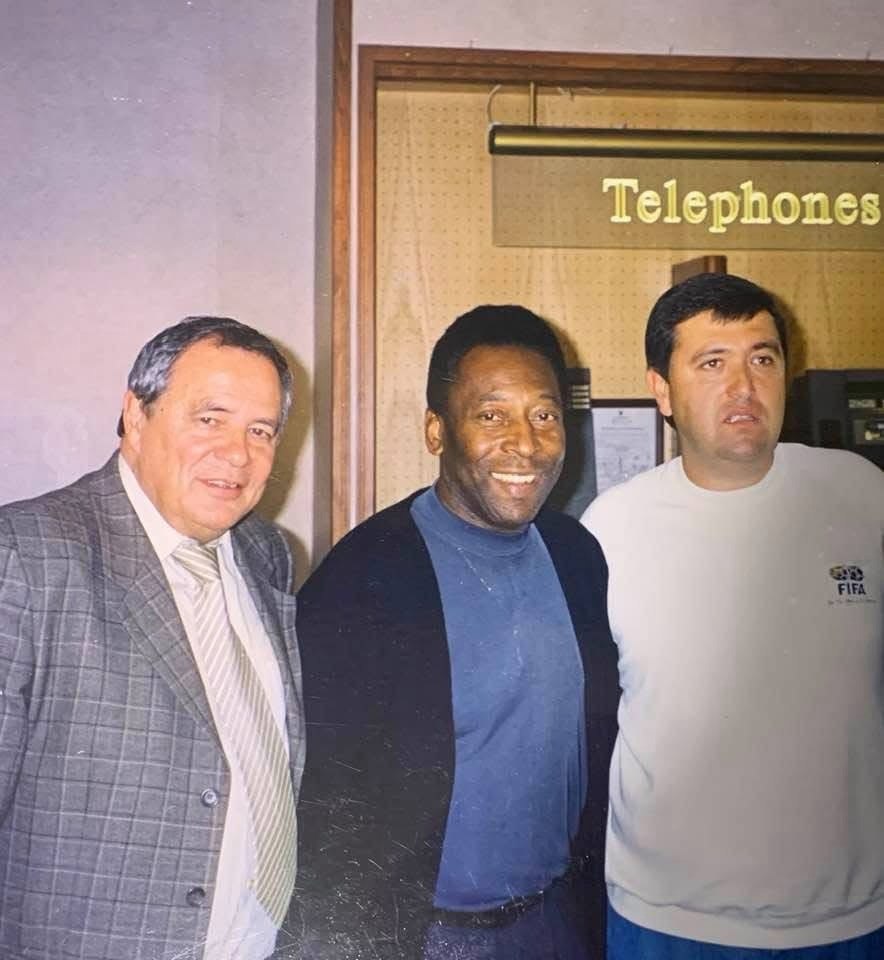 Alisher Aminov and Pelé. Photo from Alisher Aminov’s personal archive
But I have to say that my experience of dealing with Mr. Irmatov in this respect has been rather sad. All proposals related to fundamental reform are gathering dust somewhere under the carpet. Ravshan Sayfiddinovich is completely content with the current state of affairs: one-man control of the federation, an effectively non-functioning governing body — the executive committee — and specialized committees afflicted by chronic impotence, including, of course, the football development committee.
Irmatov is a classic product of the system. Logically enough, without the slightest doubt or hesitation, he projects the principles entrenched in the vertical of power onto a public federation. What is more, he is close to the top of the AFC and has now also been delegated to one of FIFA’s committees. Within this paradigm, the trajectory of his rise is entirely logical.
— How deep, in your opinion, is the crisis of international football justice?
Effective work by a national association is possible only with a strong management team that makes decisions collectively: through the active participation of committees and through an executive committee formed on a professional basis from delegates representing football’s key stakeholders.
What have I had to deal with over the past 20 years in a number of former Soviet countries that invited me to help develop comprehensive programs?
First of all, federation presidents are, as a rule, classic “appointees”: inhabitants of the corridors of power, officials, relatives of presidents — people the football community does not elect but, out of its own spinelessness, accepts. By and large they do not understand football, do not grasp the depth of the systemic problems and do not want to see the threats. Their main concern becomes a fiercely jealous attitude toward their own powers and a drive to lock every process around themselves — and, with it, the financial flows. Intrigue, squabbles and systemic corruption are the usual atmosphere in such offices. Achievements, if there are any at all, are local in nature. There can be no talk of a solid foundation.
Sport is an extremely complex, highly specific sector with its own jurisdiction. The chief statutory duty of the president of any sports federation is to unite healthy forces in the name of development, not to exist for the sake of existing. The effectiveness of a system is measured by its ability to respond competently to mistakes. But the paradox is that football — particularly in the countries of the former USSR — is utterly deprived of that ability. It is merely a rusty cog in the machinery of state power. Total incompetence, a syndrome of substituting concepts, uncontrolled spending on clubs and dubious foreign specialists, endless rubber-stamping when required — this is the football reality not only for Uzbekistan, but for many other countries.
One recalls with nostalgia the days when FIFA under João Havelange and the early Sepp Blatter, and UEFA under Lennart Johansson, firmly defended the independence of federations and swiftly imposed sanctions for violations. In the era of the late Blatter, and all the more so under Infantino, FIFA has turned into a closed, authoritarian structure strung onto the vertical of power and regularly rocked by corruption scandals. But, as the saying goes, one crow will not peck out another’s eye.
— You are saying the fish rots from the head?
Infantino’s predecessors were true angels by comparison. Today’s FIFA long ago abandoned the principle of political neutrality: the law has kept only its form and lost its substance. Infantino has brought the International Federation of Association Football under his personal control and organized its work so that evading responsibility for breaches of the regulations has become the norm — and a model for national associations.
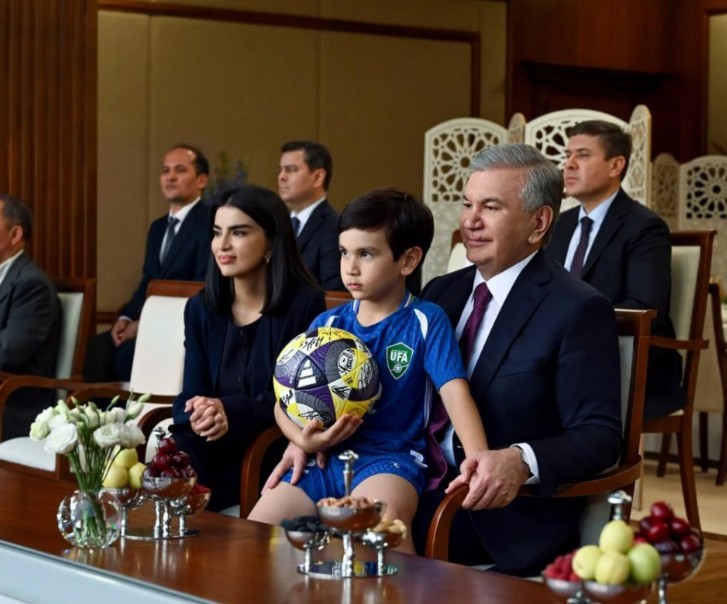 Shavkat Mirziyoyev and Saida Mirziyoyeva. Photo courtesy of the Uzbek president’s press service
The notorious criminal case over the ties between the FIFA president and the Swiss attorney general, and its shameful closure, is a verdict on Europe’s law enforcement system. All these law firms and highly paid lawyers who zealously serve big football exist, as it turns out, not to combat violations, not to expose and punish those who trample on the rules and the law, but to cover for the right people and help them pump money out of football.
To shed any illusions, a quick glance at the recent past is enough. A few examples — and the thesis that “sport is above politics” instantly collapses.
To demonstrate the viability of the theory of racial superiority, Hitler greeted his compatriots — the winners of the 1936 Berlin Olympics — from the stands, while refusing to do the same for non-Aryan Olympians. After the USSR team’s defeat at the 1952 Helsinki Olympics, Stalin ordered the legendary “team of lieutenants” to be disbanded. Berlusconi ran for office under the slogan “Forza Italia!” — the trademark chant of Italian tifosi. This list is easily extended to the present day.
Sport really does help to devise effective ways of dividing society into “friends” and “enemies.” It is a universal instrument of influence that makes it possible to regulate the level of social pressure. Clearly, today’s political class is happy to use it. It is so simple and so profitable to cast oneself as one of the “fathers of the nation” who cannot live without their friendship with sport and its finest representatives.
And what is left in the end is plain arbitrariness, because it is state officials hungry for cheap swagger, or the executives of major companies, who diligently scramble up Olympus. Their “rear support” is provided by oligarchs and the denizens of the corridors of power. Unfortunately, no other methods have been devised in the post-Soviet space.
— Money does not grow on trees. It has to be earned, found or begged for.
At the turn of the century, every sports federation in every post-Soviet territory, without exception, faced enormous financing problems. Their dependent position turned them into professional beggars who, in order to survive, learned to trade seats — that is, to bring “wedding generals” into leadership positions. A state official could thus simultaneously “serve” as the president of a public organization he oversaw and as a member of an international federation’s executive committee. There were many such one-man bands. They could not care less what is actually happening in the domain entrusted to them, what problems are eating away at it or where it needs to go. Trading on their position of power, they drove alternative opinions out of the toolkit entirely.
In Uzbekistan in particular, a situation has long taken shape in which the fate of the country’s most popular sport is decided by two or three people, backed by funds that lie beyond any auditor’s reach. The political elite has put down deep roots here and now “understands” football very well.
— In that case, what should the role of state leaders in sports governance be?
In my view, both the president of Uzbekistan and the heads of his administration misjudge the “weight” of football as a socio-political instrument. At the same time, most professional clubs are kept afloat at state expense. Teams spend more than $170 million a year on salaries and training camps alone. An insane amount of money — and it is taxpayers’ money. In other words, civil society is turning out its own pockets to keep the clubs running. Meanwhile, around 80 percent of men in Uzbekistan follow football. There it is — the interested electorate! If our political leaders truly understood the dividends that competent sports management could deliver, they would be playing an entirely different game. For the common good, of course, but without forgetting their own beloved selves. Incidentally, the example of media magnate, politician and AC Milan owner Silvio Berlusconi, whom I mentioned earlier, is telling here. He was one seriously impressive operator.
The state has no right to interfere in the affairs of public organizations. It should only help them. If the federations and the Olympic Committee are occupied by petty princelings with no substantive connection to sport, the sector’s degradation is inevitable. To win two or three landmark victories, hand out cars, apartments and bonuses to footballers from the master’s table, and then convince both yourself and society that everything is in perfect order — that is a road to nowhere.
— What main problems in the sports sector could the leadership of the presidential administration run into?
The administration needs to fundamentally rethink the principles by which the sector operates, in order to answer honestly the question: are we heading in the right direction, comrades? For me the answer is obvious, so I will single out three key points, each requiring systemic and targeted action.
The first, and probably the simplest, requires only political will: the removal of the authorities’ appointees from every public sports federation.
The second is considerably harder. It concerns the material, scientific and methodological support of the sports sector, and the development of educational programs for the main participants: athletes, coaches, managers and referees. Here the correct, carefully calculated balance must be struck — without the usual ostentatious largesse, but at a solid level. As far as football is concerned, state spending on maintaining clubs must be cut by introducing financial regulations; an effective model for developing a reserve must be put in place; and the system for transferring talented players who attract interest from foreign clubs must be regulated. In addition, an anti-crisis program must be drawn up in case the economic situation deteriorates — a kind of mobilization plan.
The third point is the sharpest, so to speak. It is not hard to guess that state officials cut off from the feeding trough will not let professionals work in peace. That means clear legal mechanisms must be developed to govern the interaction between the state and sports organizations.
— Might it be simpler and more effective to bring in foreign specialists of various fields and levels?
Simpler — certainly. As for effectiveness in the long run, I have serious doubts, to put it mildly. It is a flawed and humiliating logic. Yes, in terms of management Uzbekistan is far behind Germany or France. But listen — we are not a third-world country. We are a self-sufficient, independent state that, against all the odds, has achieved a great deal in sport. To doom ourselves to dependence on foreigners and their outlandish demands is to belittle and dumb ourselves down.
The entire current management crowd, people like Irmatov, is obsessed with the idea of winning something, somehow, at any cost. Hence the vast outlays on top Europeans such as Fabio Cannavaro — a coach without experience, but with a football name. “Ballon d’Or winner takes charge of the Uzbekistan national team!” What magical phrasing, is it not? And what lies behind that decision in terms of professional competence is a secondary matter.
At the same time, Irmatov, relying on powerful state backing, effectively remains outside any real financial oversight. In 2024, reports already appeared in the press of a major scandal inside the UFA: according to the media, the association’s accountant may have stolen around $350,000 and fled the country. As far as I know, after Azizov’s intervention the money was returned, but the story never received any clear public follow-up. In any case, there were no visible personnel consequences: the first vice-president went on running the office. And this is just one of the episodes that reveal how closed the system is: upward flow the fine slogans and reports, while downward flow the regions’ dependence, the bowed back and the outstretched hand.
— You mentioned non-functioning committees and a non-functioning UFA executive committee. Is it really that bad?
Let me simply list the main committees that should be working but are not: the committee for implementing development programs, the international committee and the finance committee. Irmatov does not want to set up a finance committee at all, since its functions naturally include control over the spending of funds. And that is sacred ground: no outsider is allowed through that door. The public knows absolutely nothing about the work of the other committees, even if they exist. Nowhere can you find their memberships, their plans or, still less, their working minutes.
What is there even to discuss if the UFA does not have a developed and approved development program for the coming years? The working agenda is set by Irmatov, not by the executive committee, because the UFA president, career security officer Bakhodir Kurbanov, is out of the loop. A classic “wedding general” who can be advised to do anything at all. The executive committee, a non-functioning governing body, has long since turned into a feeble parody of itself.
The heads of the regional associations also deserve a separate mention: as a rule these are local hokims, who can hardly be called football stakeholders. Why bring state officials into the UFA’s governing bodies? Yes, it is clear they can help with financing on the ground — but is it really necessary for them to join the association’s leadership and put on a show of interest there?
I have said it many times and am ready to say it again: there can be no closed questions in the work of the UFA. Every decision must be available to the public. How many independent audits have there been under all the UFA presidents combined? Then publish the texts and the detailed expenditure breakdowns. Where did the sponsors’ money go? Who were the subcontractors on the construction of the national football center? Incidentally, the very fact of its appearance can only be welcomed: with the support of the president of Uzbekistan, the most modern training center, Dustlik, was built in three years.
These are not questions thrown into the air — they are questions for the auditors and the investigative bodies. But as things stand, no one is going to ask them. The country’s president decorates Irmatov, but these awards are less for the development of football than for its destruction — and for debauchery, because a group of people is treating a public organization’s money as if it were their own.
— Your assessment of the system for financing and managing clubs?
In this respect our football splits into two categories: some clubs are financed by state companies, others by regional authorities. The third and most promising, most sensible category — private business — has, alas, quietly died. Need I say again that in both existing models, club football is a bottomless subsidized pit?
A characteristic trait of club owners — that is, the heads of state companies and the hokims — is the urge to build management out of friends or subordinates who, at best, know football only by hearsay. Not a single hokim is capable of staffing a club with qualified management. Is it really not obvious that our entire football suffers from incompetent, parochial management?
In the absence of a legal mechanism to regulate financing, the “unwritten system” flourishes. No one dares remind the Professional Football League that assessing refereeing and referees’ qualifications is not within its remit. The PFL casts itself as a champion of football’s purity, but such a champion should start with itself. It might ask, for instance: why are clubs allowed to register players before the transfer window opens? How are licenses granted to clubs carrying systemic debts? On what grounds were clubs admitted to the Pro League while bypassing the First League?
But instead of offering explanations, it is apparently more productive and more just to charge into the arena, swing a sabre and demand ritual sacrifices among the referees. Meanwhile the PFL considers it normal to haul disobedient journalists “onto the carpet,” while ignoring any even slightly pointed question.
The decay of club football is obvious, yet millions of dollars in state money continue to settle every year in the pockets of unprofessional managers.
— Uzbekistan has recently adopted a number of presidential resolutions that fundamentally change the principles of club financing…
Previously, our football relied to a significant degree on major injections from the state. Uzbekneftegaz, for example, stated that in past years up to 300 billion soums — roughly $25 million — was allocated annually to support football. On the whole, club budgets were formed in conditions far removed from a market model. Now each team receives an initial state tranche of 35 billion soums ($2.9 million), but at the same time falls under a strict salary cap. The maximum salary for a footballer has been set at 27 million soums a month ($2,250), and after tax that comes to around 23 million soums ($1,900). The restrictions have also hit coaches: a head coach’s salary may now not exceed 10 million soums a month ($830).
For young players, 27 million is quite attractive money, but it will be hard to keep experienced footballers on it. These measures have already stirred discontent within the football community. Clubs that signed contracts with foreign players and specialists before the season began have run into serious difficulties. As far as I know, foreign players at many teams have not been paid for six months. Players are refusing to train after learning of the new payment terms and are filing claims with FIFA’s Dispute Resolution Chamber.
Uzbek footballers face even greater problems, because the local chamber and the players’ union, as time has shown, do not fully defend players’ interests, falling in line instead with the policy of the UFA leadership and the league. The prolonged financial crisis at Samarkand’s Dinamo is clear confirmation of this. All the foreign players have left the club, demanding enormous compensation. Two national team players have gone eight months without pay. In effect, Dinamo, which lacks modern infrastructure, is on the verge of bankruptcy. And the regional hokim has washed his hands of the problems entirely.
— But the government has set a course toward commercializing the sector?
The state is keeping partial financing in place for a transitional period — two or three years — during which the clubs are supposed to find private investors. Local authorities will no longer be able to cover deficits through administrative muscle. The reforms’ authors regard the measures as harsh but necessary to break the dependence on subsidies.
— Your view of these innovations?
To form a clear opinion, one has to study both the documents and the experience carefully. My first impression is that the reforms are decorative in nature and do not merit serious attention, because the conditions needed to implement an economic model have not been created. In developed football nations, the development of the game is not driven by presidential and government resolutions. It is even comical to imagine Italy’s prime minister Giorgia Meloni or French president Emmanuel Macron issuing decrees on financing football or building a reserve-training system. That approach is the lot of countries where sport serves politics and is kept on a short leash. Until we understand that football demands a professional rather than an administrative approach, any decree will remain a mere formality.
— You have 20 years of struggle against the system behind you. What keeps you going?
I have nothing and no one to fear. Over these years I have been through a great deal firsthand: I suffered for taking a principled stand on the most varied issues; for the hard, behind-the-scenes work in the RFU development committee; for my open fight with Vitaly Mutko, who blocked the Development Committee’s projects; for the sordid RFU presidential election; for the betrayal by Nikolai Tolstykh and the “elite” coaches; for the protection extended by Switzerland’s political and law enforcement system during the investigation into the criminal case involving the FIFA president. But fighting for professionalism and justice is not a heroic feat — it is a conscious necessity.
-
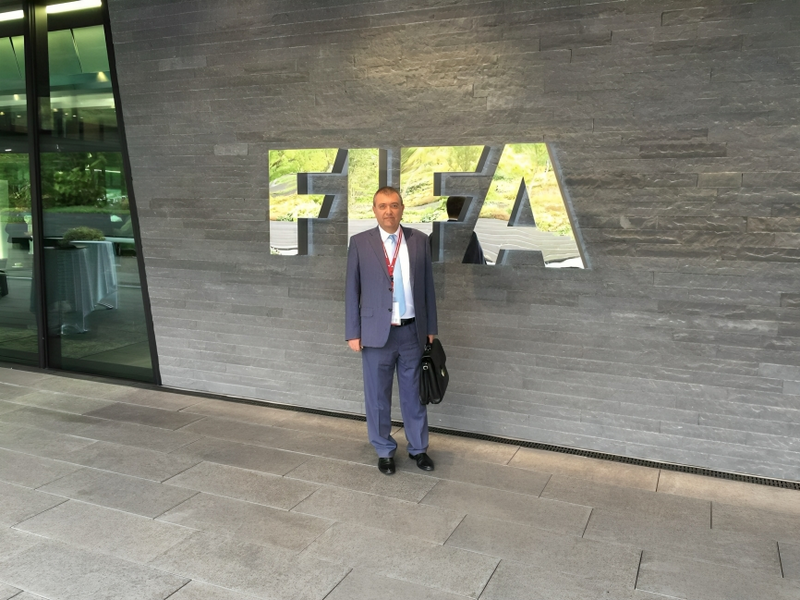 22 May22.05'FIFA Has Become a Political Cartel'Alisher Aminov on Gianni Infantino's bid for a third term
 -
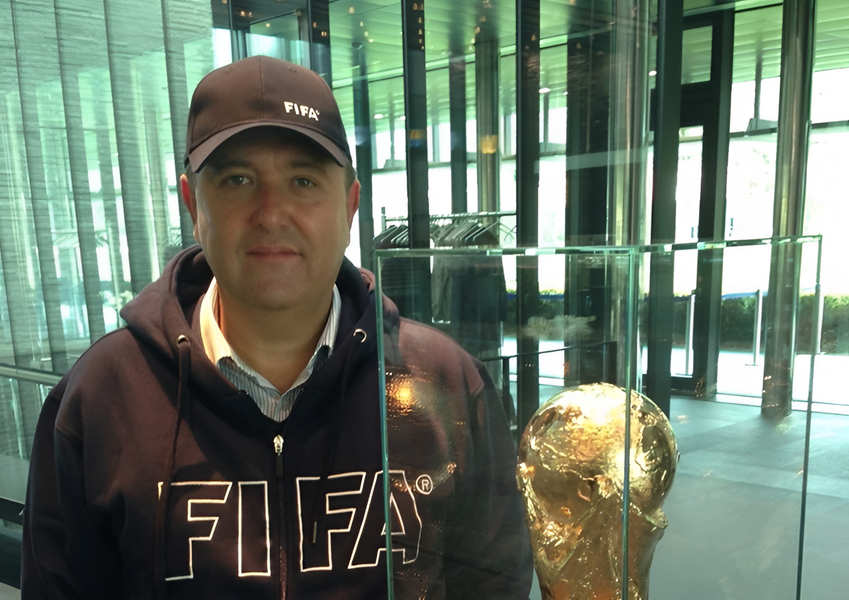 08 April08.04World Football Needs a Forced RebootAlisher Aminov on Italy's failure, Michel Platini, the «Iran case» and chaos at FIFA
 -
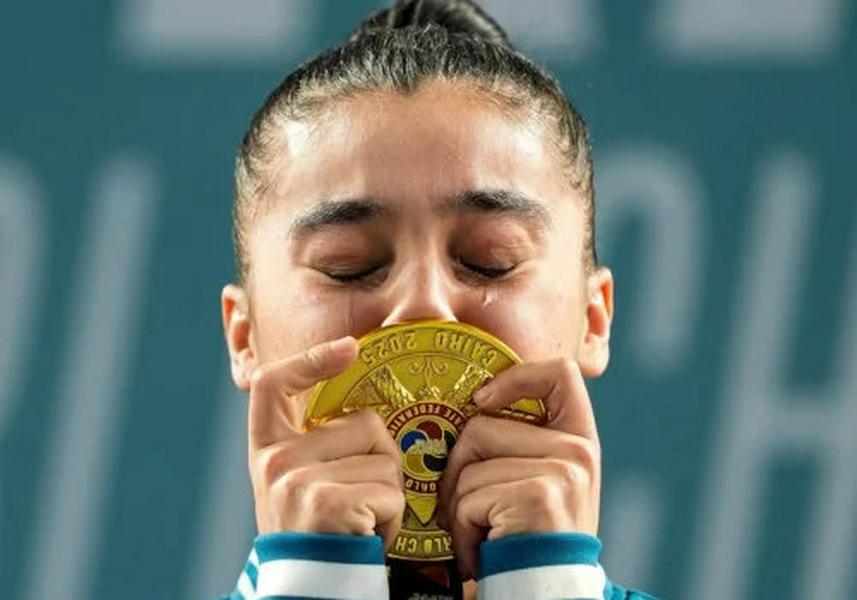 17 December17.12Gulshan Is the BestYoung Uzbek Karateka Becomes World Champion
 -
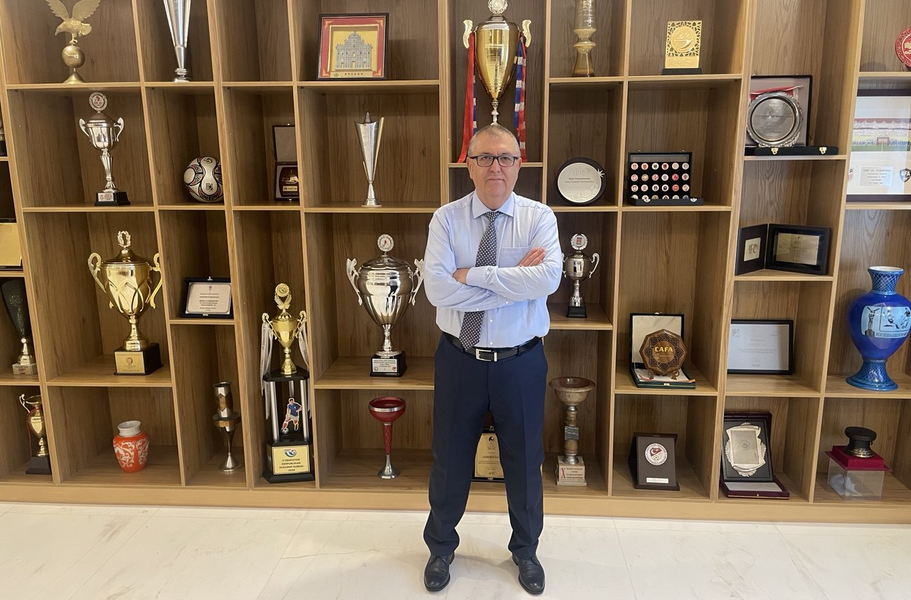 01 November01.11Catching Up with UzbekistanAlisher Aminov on the Problems of Kazakh Football and Plans to Fix Them
 -
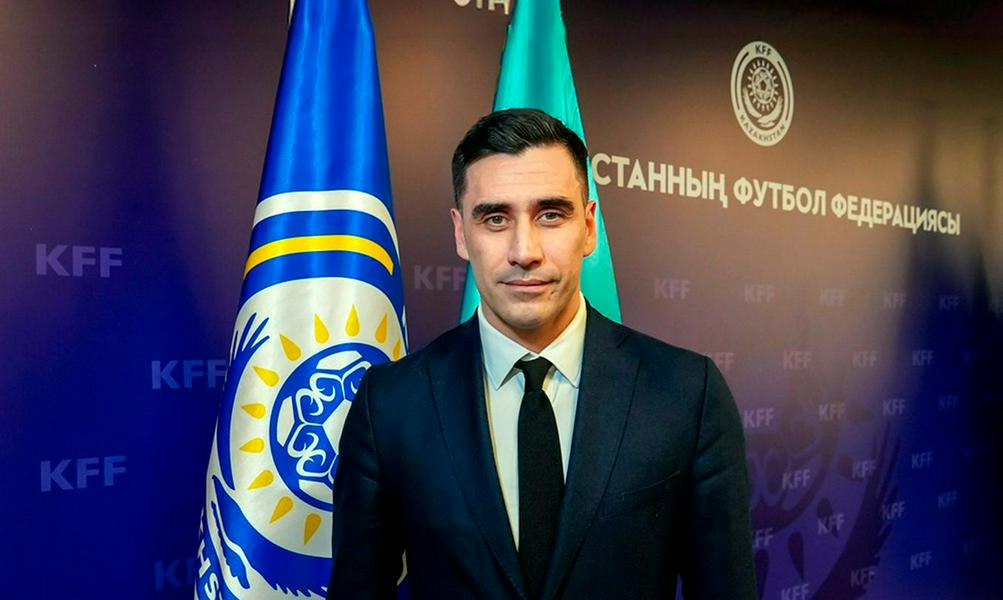 02 October02.10Football, Presidential StyleKFF Secretary General David Loria on the expansion of the Premier League, the new national team coach, and Tokayev’s role in Kazakh football
 -
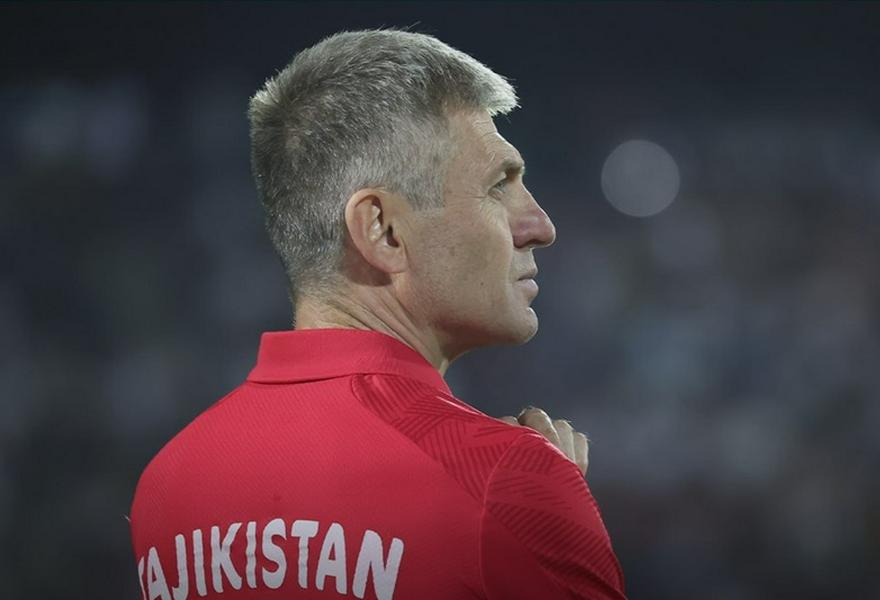 25 September25.09I Am Proud to Have Been Part of the Triumph of the Tajikistan National TeamGela Shekiladze sums up three years in Tajik football
-
Uzbekistan is expanding a Chinese cotton-growing method to a third of its cotton fields
-
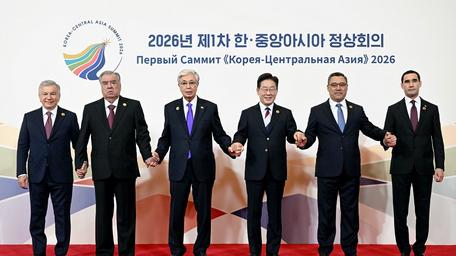
Critical minerals, artificial intelligence — what else was discussed at the “Central Asia–Korea” meeting
-
From Analyst to Kazakhstan's Second-in-Command: How Erlan Karin's Views Have Evolved
-
An Islamic civilization media forum in Tashkent gathered over 300 journalists from nearly 50 countries