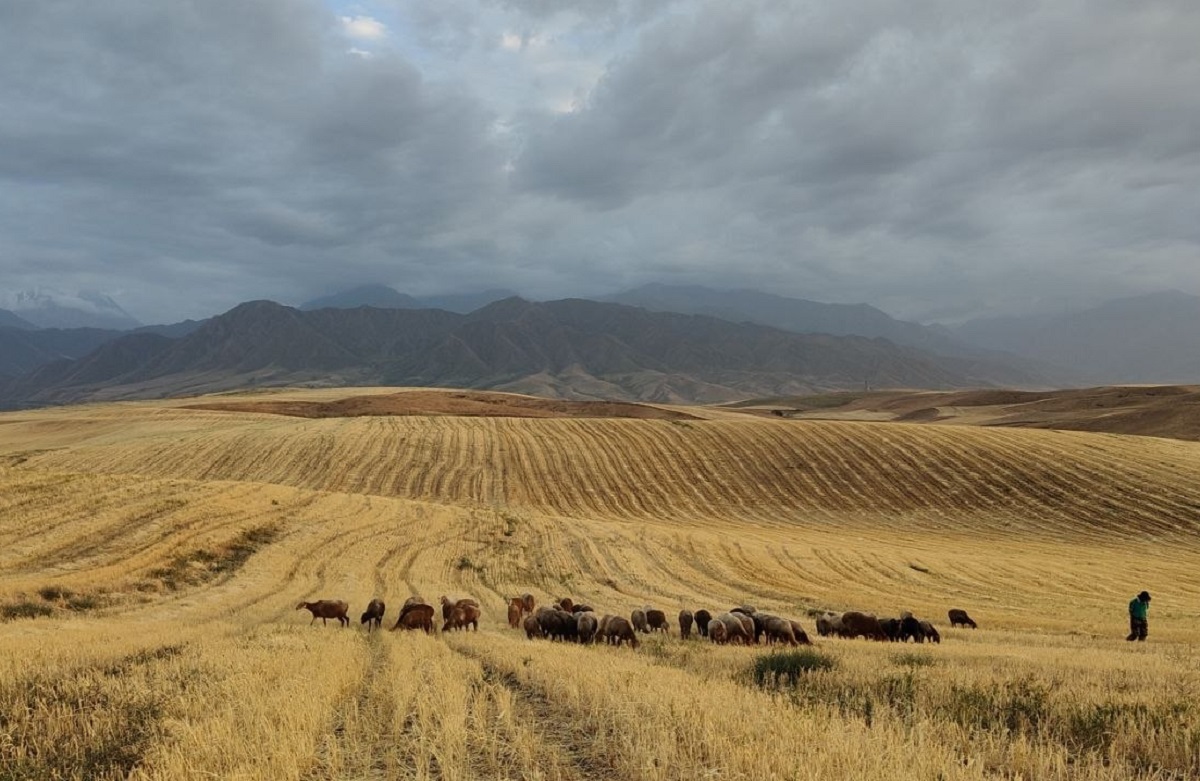
 Photo: Fergana
A total of €264.4 million will be allocated to restore forests, pastures, and agricultural land across Uzbekistan, Kyrgyzstan, and Tajikistan. The funding is earmarked under the international Climate-Resilient Landscapes in Central Asia (CLiCA) program, officially launched on November 9 at the UN Climate Change Conference (COP31) in Antalya, Turkey, according to records released by the Green Climate Fund.
The program spans seven years, with the largest share—€103.75 million—designated for Uzbekistan. Kyrgyzstan will receive €74.49 million, while Tajikistan is slated for €72.25 million. An additional €13.89 million will cover regional initiatives and administrative costs.
The financing aims to rehabilitate degraded forests and rangelands, curb soil erosion, deploy water-saving technologies, and bolster climate adaptation in agriculture. Sustainable land management practices are set to be introduced across roughly 939,000 hectares in the three nations. The program will also support rural residents, farmers, and entrepreneurs by providing access to grants, loans, and modern agricultural equipment.
In Uzbekistan, projects will encompass 15 districts across the Andijan, Namangan, Fergana, and Surkhandarya regions. Plans call for restoring 18,000 hectares of forest and 123,000 hectares of pasture, alongside introducing drip irrigation and drought-resistant crops. Around 12,000 farmers are expected to receive advisory support.
In Tajikistan, primary efforts will center on vulnerable districts in the Khatlon region and the Fergana Valley. Key initiatives include restoring mountain ecosystems, stabilizing slopes, safeguarding watersheds, and upgrading irrigation networks.
In Kyrgyzstan, focus will be placed on conserving mountain landscapes, forests, and rangelands critical to maintaining regional water supplies and agriculture.
The program was developed by the German Agency for International Cooperation (GIZ) in partnership with the three beneficiary states. Of the total budget, approximately €119.6 million comes as Green Climate Fund grants, with the remaining €144.8 million expected through co-financing. This includes German grants, European Investment Bank loans, and domestic contributions. The proposed debt financing remains subject to further approvals. Field implementation is scheduled to begin in 2027.
According to a World Meteorological Organization (WMO) report, the 2021–2025 period was among the driest for rivers since records began in 1991. Central Asia emerged as one of the regions experiencing below-normal river discharge. Conditions were especially severe in the Aral Sea basin, which encompasses the region’s principal river systems. Terrestrial water storage—including rivers, lakes, reservoirs, snow, and ice—remained below average for the second consecutive year.
The WMO estimates that snow and ice melt generate over half of Central Asia’s river runoff. Glacier mass balance across the region ranked among the three most negative on record. Experts warn that by the end of the 21st century, Central Asian states could face some of the world's steepest declines in summer glacial runoff. The WMO is urging governments to expand joint water monitoring, data sharing, and early warning systems.